

Is There a Perfect Age to Get a Facelift?
July 9, 2026
Is There a Single Best Age to Get a Facelift?
When patients visit our offices in Las Vegas, NV, and Beverly Hills, CA, they often ask if there is a specific chronological milestone—such as turning 50—that marks the perfect time for a facelift. The short answer is no. There is no single “right” age to undergo a facelift because biological aging is a highly individualized process.
Our chronological age simply measures the passage of time, whereas our biological age reflects the actual state of our skin, muscles, and underlying facial support structures. While one person may experience significant structural descent in their mid-40s, another may maintain excellent tissue support well into their late 50s.

Statistically, the vast majority of patients who choose to undergo facial rejuvenation do so during a specific window. Clinical data reveals that the average age of patients undergoing their initial facelift is 53.5 years, with the most common age range for the procedure falling between 40 and 60 years old. During this two-decade span, the cumulative effects of gravity, volume loss, and declining collagen production become highly visible, making surgical intervention highly effective.
To understand how this average age applies to individual candidates, it is helpful to look at regional trends and expert consensus. For instance, when analyzing patients in Las Vegas, we find that those in active, sun-exposed climates often seek consultations in their late 40s or early 50s due to accelerated photoaging. Similarly, Beverly Hills timing insights emphasize that high-visibility professional environments often prompt patients to seek early, proactive structural restoration rather than waiting for advanced aging to take hold.
We have also observed a profound demographic shift in who is seeking these procedures. Historically, facelifts were viewed almost exclusively as a treatment for women. However, male facelifts have increased by 43% since 2010, shifting the female-to-male patient ratio from a historic 98-2 closer to an 80-20 split. Men are increasingly recognizing that a defined jawline and a refreshed neck can significantly impact their professional confidence and competitiveness, particularly in major business hubs like Southern California and Southern Nevada.
Deciding on the optimal timing requires moving away from chronological benchmarks and focusing on anatomical changes. To learn more about how we evaluate these individual milestones, you can read our guide on What Is the Best Age to Consider a Facelift or Neck Lift?.
How Do Genetics, Lifestyle, and Skin Elasticity Influence Your Timing?
Your personal timeline for a facelift is dictated by a complex interplay of genetic programming, lifestyle choices, and the inherent quality of your facial tissues. Understanding these variables helps explain why two patients of the identical chronological age can have vastly different surgical needs.
Skin Elasticity and Tissue Quality
Skin elasticity—the skin’s ability to stretch and snap back into place—is the primary currency of successful facial plastic surgery. In our youth, abundant collagen and elastin fibers keep the skin resilient. As we age, these fibers degrade.
If you still possess relatively good skin elasticity, the skin “redrapes” beautifully over your newly elevated facial muscles, resulting in a seamless, natural rejuvenation. When elasticity is severely compromised (a condition known as severe elastosis, often characterized by deep, leathery wrinkling), the surgical approach must adapt to address the lack of structural rebound.
The Role of Genetics
Genetics serve as the blueprint for how your face will age. Your DNA dictates:
- Bone Structure: Strong, prominent cheekbones and a defined jawline provide a sturdy skeletal scaffold that supports facial tissues longer, delaying the appearance of jowling.
- Volume Loss: Some families naturally retain facial fat pads longer, while others experience early midface hollows and temporal wasting.
- Intrinsic Aging Rate: The speed at which your body naturally degrades collagen is largely hereditary.
If your parents developed early neck laxity or heavy jowls in their 40s, you are highly likely to follow a similar anatomical trajectory, making you an earlier candidate for surgical correction.
Lifestyle Accelerators
While genetics load the gun, lifestyle pulls the trigger. Several external factors drastically accelerate biological aging and alter your facelift timeline:
- Sun Exposure: UV radiation breaks down collagen and elastin fibers, leading to premature sagging, thinning skin, and deep wrinkles. This is particularly prevalent among our patients in sunny climates like Nevada and California.
- Smoking and Nicotine Use: Nicotine constricts blood vessels, starving facial tissues of oxygen and vital nutrients. This accelerates wrinkling and severely compromises surgical healing.
- Rapid Weight Fluctuations: Gaining and losing significant amounts of weight stretches the skin’s supportive envelope. Once the underlying volume is lost, the stretched skin cannot contract, leaving behind empty, sagging tissue.
Objective Signs of Surgical Readiness
Rather than focusing on age, we look for objective anatomical indicators that show non-surgical treatments are no longer sufficient. These signs include:
- Lower-Face Jowling: The descent of cheek fat pads past the jawline, disrupting a smooth, continuous jaw contour.
- Deep Nasolabial Folds and Marionette Lines: Deep creases running from the nose to the corners of the mouth, and down to the chin, caused by falling midface tissues.
- Neck Laxity: The accumulation of loose skin under the chin, often accompanied by vertical muscle bands (platysmal bands) and loss of a sharp cervicomental angle.
When these structural changes occur, the physical state of your face has moved beyond what surface-level treatments can address. Attempting to camouflage these deep structural shifts with temporary measures can lead to an unnatural appearance. Instead, addressing the root anatomical descent with a tailored surgical plan ensures that we restore the underlying foundation rather than simply pulling at the surface.
What Are the Risks of Getting a Facelift Too Young?
In an era dominated by high-definition cameras, Zoom meetings, and social media filters, there is unprecedented pressure to maintain a flawless, unlined appearance. This “social media effect” has created an intolerance for even the most minor, natural skin laxity. Increasingly, patients in their 30s are seeking consultations for surgical facelifts. However, undergoing a facelift too early carries distinct physical, aesthetic, and psychological risks.
First, we must distinguish between natural facial movement and actual structural descent. The human face requires a certain degree of natural skin laxity to express emotion, smile, and blink. When younger patients mistake normal, functional skin movement for premature aging, they risk pushing for surgeries they do not need.
If a surgeon operates on a face that does not have true structural sagging, there is very little tissue to actually lift. This increases the risk of an over-tightened, unnatural, or “windblown” appearance.
Furthermore, a facelift does not stop the biological clock; the face will continue to age naturally after the procedure. If you undergo your first facelift in your mid-30s, you will almost certainly require a secondary, revision facelift in your late 40s or 50s to maintain the results.
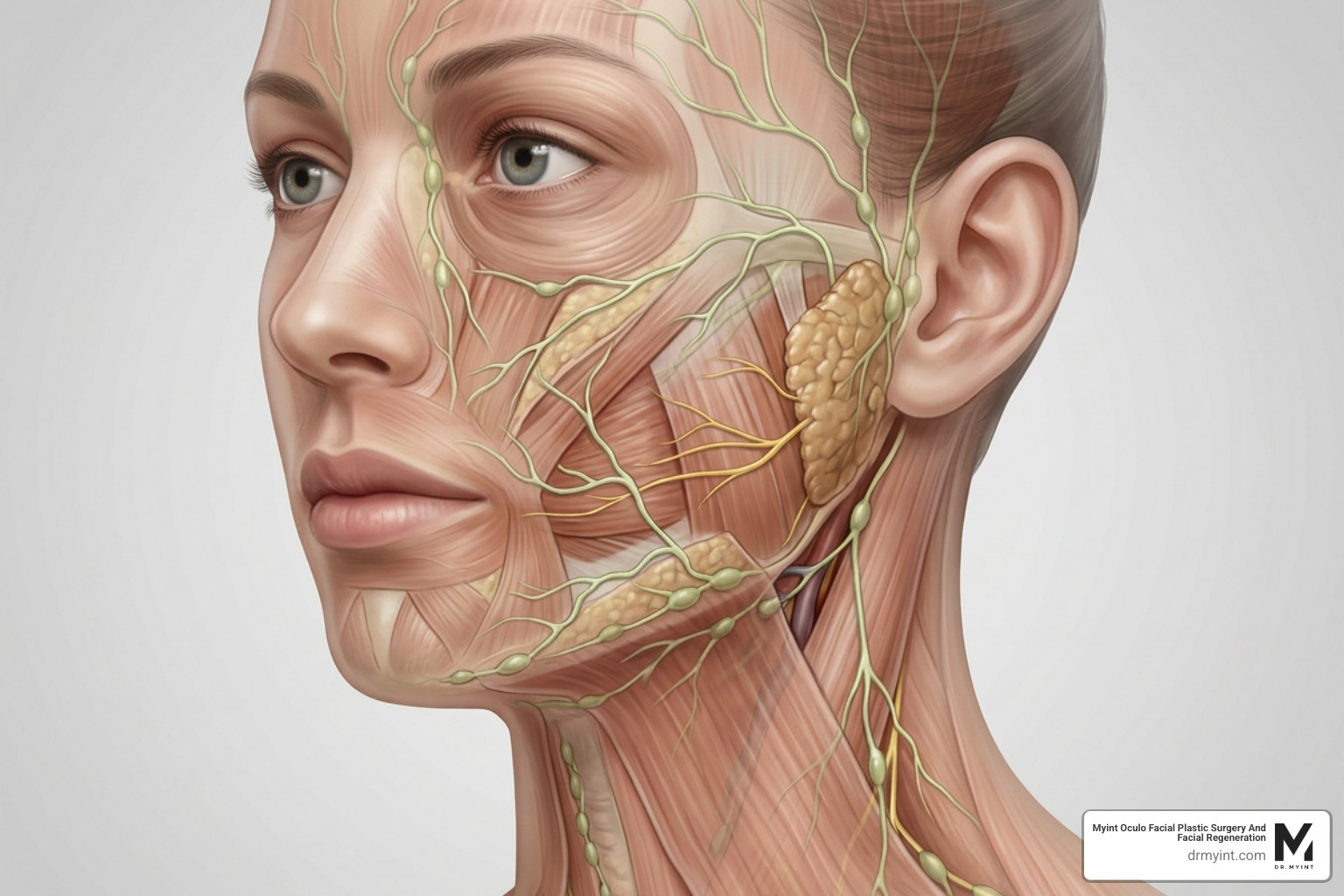
Secondary facelifts are inherently more complex due to the presence of surgical scar tissue from the initial operation. This scar tissue alters natural tissue planes, making subsequent dissections more difficult and increasing the risk of complications, including potential injury to the facial nerves.
Additionally, surgical incisions leave permanent scars. While skilled surgeons hide these incisions meticulously within the natural creases of the ear and hairline, early-life scarring remains a lifelong consideration. If you are exploring this topic, we highly recommend reading our detailed analysis on Am I Too Young for a Facelift? to understand how we evaluate early-stage aging.
For younger patients, we generally advise “pumping the brakes” on major surgical lifting. Instead, we focus on preserving skin quality and managing early volume loss through conservative, non-surgical modalities. To understand why this trend is growing and how to navigate it safely, explore our article on the Five Reasons Why More Young People Are Getting Facelift Surgery, and listen to surgeon discussions on early facelifts to gain a broader perspective on modern clinical ethics.
What Are the Benefits and Drawbacks of Waiting Until Your 50s, 60s, or Later?
Every decade presents a unique set of anatomical opportunities and clinical considerations. When planning a facelift, weighing these decade-specific advantages and disadvantages is essential for achieving a safe, long-lasting, and beautiful outcome.
The 50s as the Surgical “Sweet Spot”
For many patients, the 50s represent the absolute “sweet spot” for undergoing a facelift. By this decade, the signs of facial aging are distinct and structural—jowls have formed, the jawline has lost its definition, and the neck skin has begun to sag. However, the underlying tissues and skin still retain a high degree of natural elasticity.
Benefits of a Facelift in Your 50s:
- Optimal Tissue Quality: Because the skin and SMAS (muscle layer) still possess excellent structural integrity, they respond beautifully to surgical repositioning. Healing is typically rapid, and scars mature into thin, virtually invisible lines.
- One-and-Done Longevity: A high-quality facelift performed in your 50s can easily last 10 to 15 years. For many patients, this means they can enjoy a highly refreshed, natural appearance throughout their most active professional and social years, often requiring only minor, non-surgical maintenance down the road.
- Highly Natural Redraping: Because the tissues are not yet severely depleted or stretched, we can restore them to their original youthful positions without any tension, completely avoiding an “overdone” look.
Drawbacks:
- There are very few clinical drawbacks to operating in this decade, provided the patient is in good cardiovascular health and has realistic expectations.
Considerations for the 60s, 70s, and Beyond
While the 50s are highly popular, we regularly perform incredibly successful, life-changing facial rejuvenations for patients in their 60s, 70s, and even early 80s.

Benefits of Rejuvenation Later in Life:
- Dramatic, Rewarding Transformation: Patients in these decades often present with advanced skin laxity, deep wrinkles, and severe volume loss. The structural transformation achieved by a comprehensive facelift and neck lift is profound, often making patients look 10 to 15 years younger and aligning their outer appearance with their inner vitality.
- Customized, Comprehensive Care: Modern techniques allow us to tailor the procedure to address advanced aging safely, combining the lift with volume restoration to rebuild the facial scaffold.
Drawbacks and Risks:
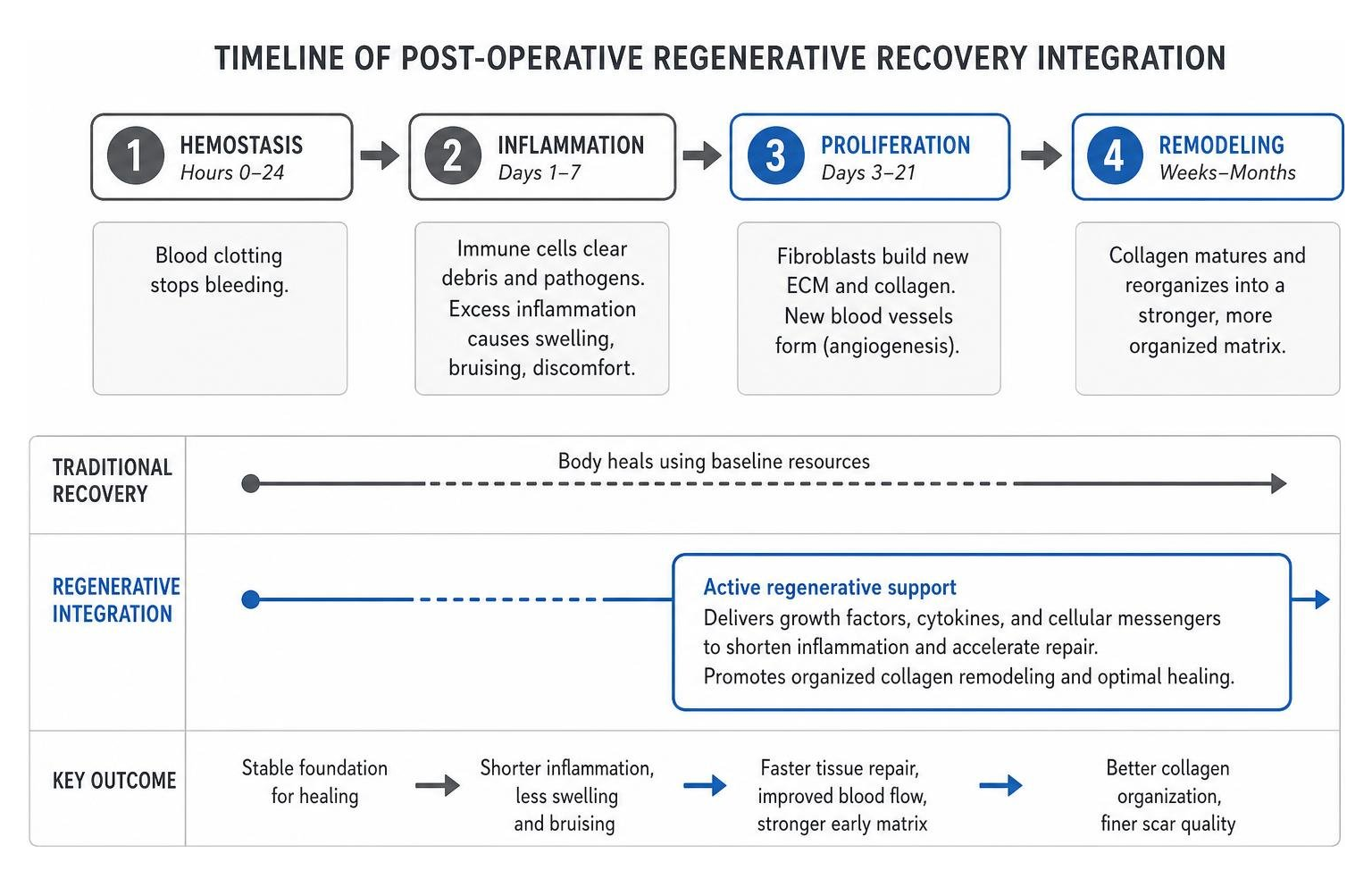
- Slower Healing Times: As we age, cellular turnover and microcirculation naturally decline. Patients in their late 60s and 70s should expect a slightly longer recovery period, with swelling and bruising taking a few extra weeks to fully resolve.
- Anesthesia and Medical Clearance: Chronological age is less important than overall physical health, but older patients are more likely to have underlying medical conditions, such as hypertension or cardiovascular disease. We require rigorous preoperative medical clearance from your primary care physician or cardiologist to ensure that elective surgery under anesthesia is completely safe.
- Reduced Skin Elasticity: When skin has lost its ability to snap back, we must rely entirely on the deep muscle layers (the SMAS) to support the lift, rather than placing any tension on the delicate, thinned skin.
Special Considerations After Weight Loss
A unique group of older candidates includes those who have undergone massive weight loss, whether through lifestyle changes, bariatric surgery, or modern medical therapies. Rapidly losing a significant amount of weight leaves the facial skin severely stretched and deflated, regardless of your age.
Surgically addressing this deflated envelope requires a specialized approach that combines meticulous skin excision with deep structural lifting and volume restoration. If you are considering this path, we invite you to read our focused clinical guide on Getting a Facelift After Weight Loss.
How Do Modern Facelift Techniques Affect the Recommended Age?
The field of facial plastic surgery has evolved dramatically over the last few decades. Historically, a facelift was a “skin-only” procedure. Surgeons made incisions, pulled the skin horizontally as tight as possible, and trimmed the excess. This outdated approach often resulted in a flattened, windblown, and highly unnatural appearance, and the results rarely lasted more than a few years because the heavy underlying muscles were left untouched.
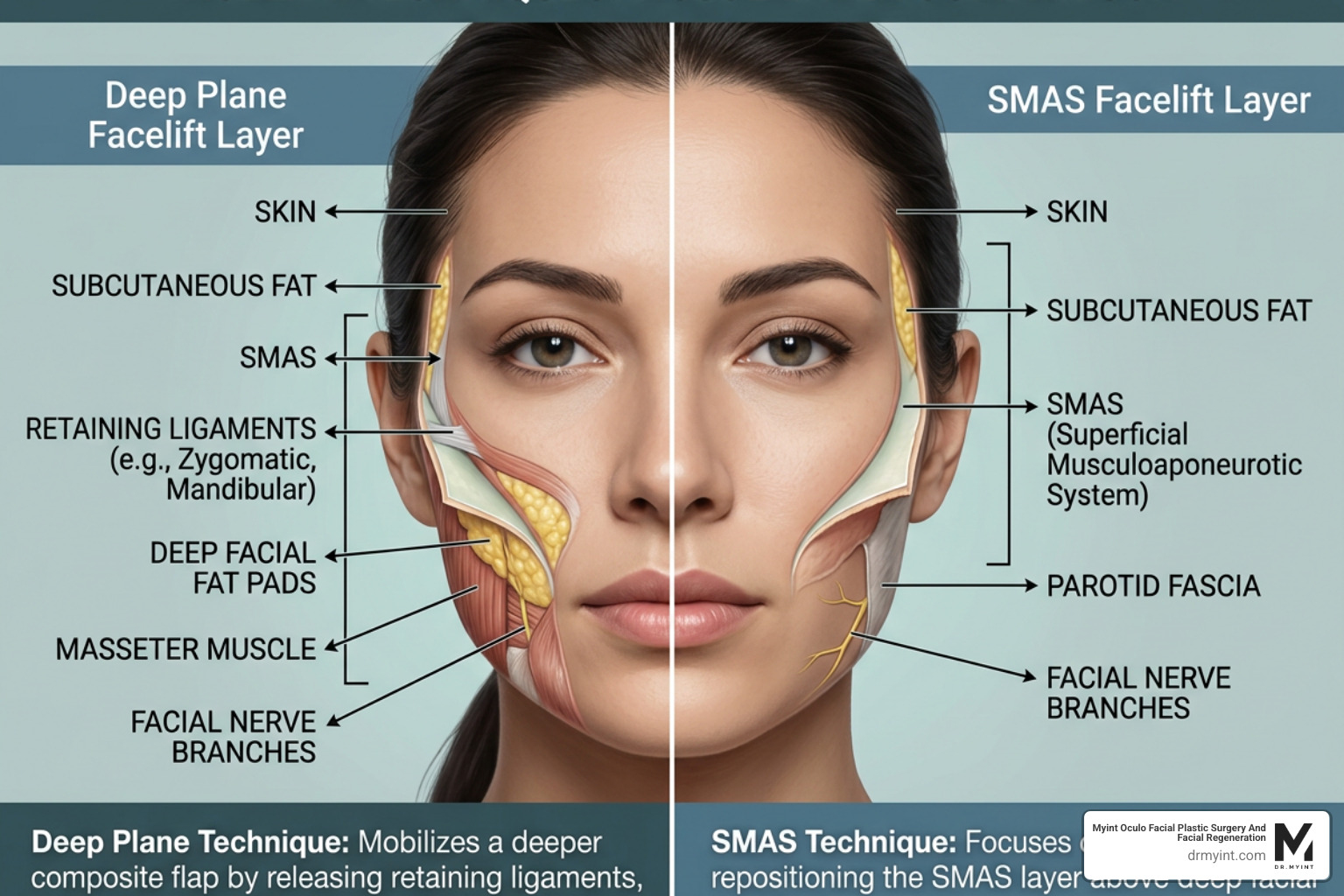
Today, modern techniques focus on repositioning the deep, supportive layers of the face. The two primary techniques utilized by elite facial plastic surgeons are the SMAS Facelift and the Deep Plane Facelift.
SMAS vs. Deep Plane Facelifts
The SMAS (Superficial Musculoaponeurotic System) is the fibrous, muscular layer that blankets the deeper structures of the face. In an SMAS facelift, we dissect the skin off the muscle, lift and tighten the SMAS layer independently, and then gently drape the skin back over it.
The Deep Plane Facelift represents the pinnacle of modern facial rejuvenation. Instead of separating the skin from the muscle, we enter a deeper anatomical plane beneath the SMAS layer. By releasing the key retaining ligaments (such as the zygomatic and mandibular cutaneous ligaments) that bind the tissues down, we can elevate the entire cheek fat pad, midface, jawline, and SMAS as a single, cohesive unit.
Because the skin and muscle remain attached to one another, there is absolutely no tension placed on the skin surface. This completely eliminates the risk of a “pulled” look, preserves natural facial expressions, and yields incredibly durable results.
| Feature | SMAS Facelift | Deep Plane Facelift |
|---|---|---|
| Anatomical Plane | Dissects skin off the muscle; tightens SMAS layer separately. | Enters deep plane beneath the SMAS; lifts skin and muscle as a single unit. |
| Ligament Release | Limited or no release of deep retaining ligaments. | Complete release of key retaining ligaments for maximum mobility. |
| Midface Rejuvenation | Moderate; often requires separate cheek implants or fillers. | Exceptional; naturally restores fallen cheek fat pads to a youthful position. |
| Skin Tension | Low to moderate tension. | Zero tension on the skin, eliminating any “pulled” or “windblown” appearance. |
| Average Longevity | 8 to 12 years. | 10 to 15+ years. |
| Ideal Candidate | Mild to moderate lower-face laxity. | Moderate to advanced jowling, midface descent, and severe neck laxity. |
How Modern Techniques Change the Age Conversation
Because deep plane techniques do not rely on stretching the skin, they allow us to operate safely on a wider age spectrum:
- In Younger Patients (40s): A deep plane lift can be performed as a highly subtle, “preventative” structural restoration. Because we are lifting the deep tissues back to where they sat just a few years prior, the result is virtually undetectable—you simply look like an exceptionally rested version of yourself.
- In Older Patients (60s & 70s): Even if the skin has lost its natural elasticity, we can achieve a highly stable, long-lasting lift because the structural support is anchored entirely to the deep, robust SMAS layer.
To ensure a completely harmonious result, we rarely perform a facelift in isolation. We frequently combine the lift with a neck lift to eliminate platysmal banding, eyelid surgery (blepharoplasty) to refresh tired eyes, and fat transfer (such as our Micro-Nano Fat Grafting) to restore youthful volume to hollow temples and cheeks.
Dr. Myint’s specialized approach utilizes his rare dual fellowship training and over 20 years of expertise in regenerative facial procedures to combine these modalities seamlessly, ensuring your results look entirely organic. For a deeper look into our surgical philosophy, explore our resource on Will My Facelift Look and Feel Natural?.
What Non-Surgical Alternatives Should You Consider First?
Before committing to a surgical facelift, many patients successfully manage early signs of aging using non-surgical, minimally invasive treatments. These options are excellent for preserving skin quality, softening fine lines, and restoring minor volume loss.
The Non-Surgical Toolkit:
- Neuromodulators (Botox/Dysport): Excellent for relaxing dynamic wrinkles, such as crow’s feet, forehead lines, and frown lines.
- Dermal Fillers (Hyaluronic Acid, Radiesse, Sculptra): Highly effective for replacing lost volume in the temples, cheeks, and under-eye hollows, and softening mild nasolabial folds.
- Energy-Based Skin Tightening: Treatments like Radiofrequency (RF) Microneedling, Ultherapy, and fractional lasers can stimulate mild collagen production, improving skin texture and superficial firmness.
When Non-Surgical Treatments Reach Their Limit
While non-surgical options are invaluable in your 30s and early 40s, they eventually reach a point of diminishing returns. Non-surgical treatments cannot lift descended tissue; they can only camouflage it.
When a patient experiences true structural descent—where the cheek fat pads have migrated downward to form jowls and the neck skin has become loose—attempting to correct these issues with dermal fillers becomes counterproductive.
Using filler to “lift” a sagging face is like trying to lift a heavy, sagging mattress by stuffing pillows underneath the sheets. It does not solve the structural problem; it simply makes the face look unnaturally wide, puffy, and distorted—a phenomenon often referred to as “pillow face” or “filler fatigue.”
At this stage, transitioning from non-surgical camouflage to surgical correction is the only way to achieve a clean, youthful, and naturally proportioned facial contour.
If you have already undergone a facelift, non-surgical treatments remain highly valuable for maintaining your skin’s surface quality. However, proper timing is essential. To learn about safely combining these approaches, read our guides on Can You Get Injectables After Plastic Surgery? and How Soon Can I Get Botox After a Facelift?.
How Long Do Facelift Results Last Based on Your Age?
A common question we hear during consultations is, “How long will my facelift last?” While a facelift permanently resets the baseline of your facial aging, your face will continue to age from that new, younger starting point. A high-quality, deep plane facelift typically delivers visible, beautiful benefits for 10 to 15 years, while traditional SMAS lifts generally last between 8 and 12 years.
Interestingly, peer-reviewed clinical research shows that the age at which you undergo your initial surgery directly impacts the longevity of your results.
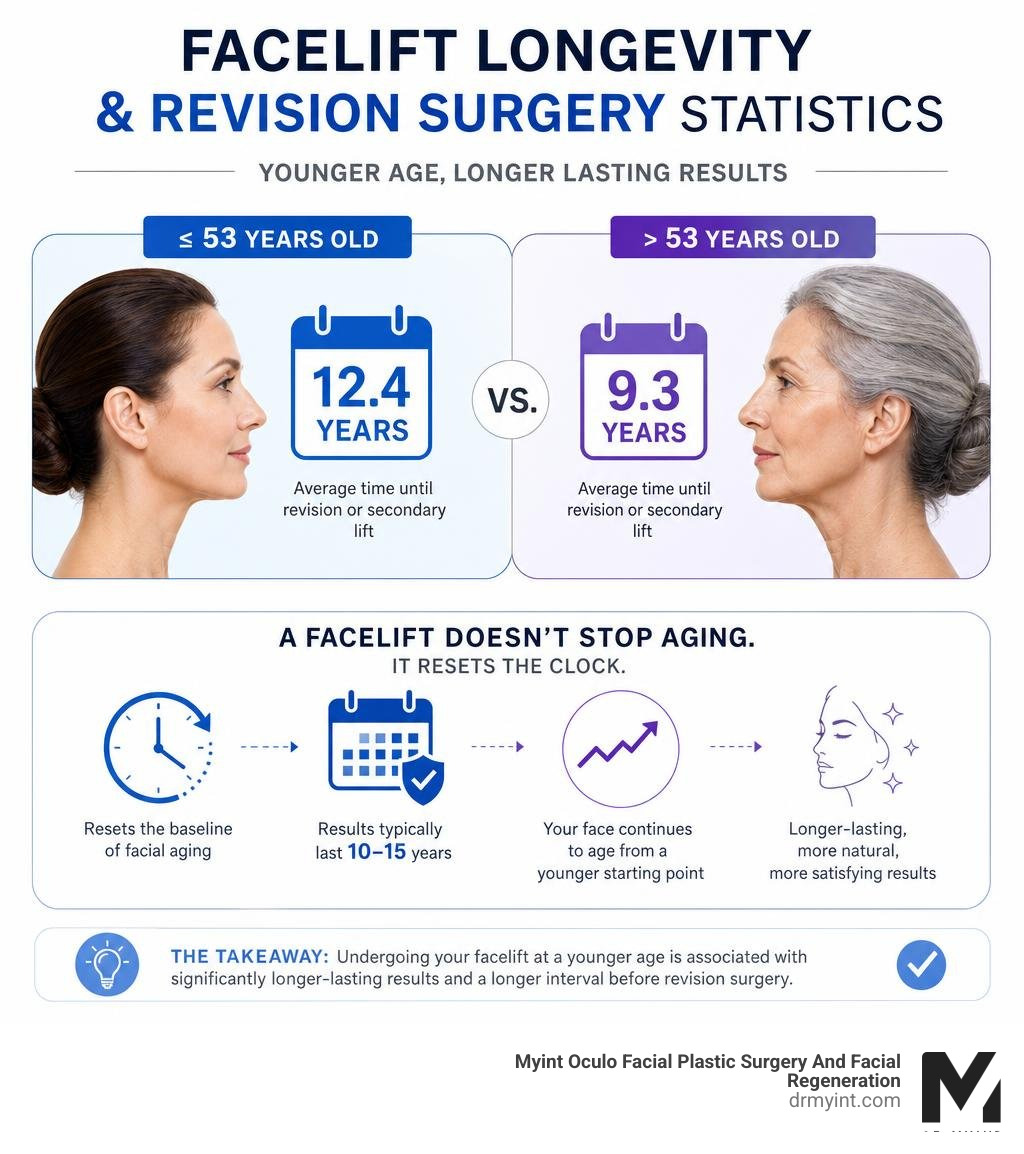
According to long-term clinical data:
- Patients aged 53 or younger at the time of their initial facelift enjoyed their results significantly longer, returning for a minor revision or secondary “refresher” lift an average of 12.4 years later.
- Patients older than 53 at the time of their initial surgery returned for a secondary procedure an average of 9.3 years later.
Why Does Younger Tissue Yield More Durable Results?
This statistical difference is rooted in cellular biology. Younger tissues (in the 40s and early 50s) possess higher natural concentrations of collagen and elastin, a more robust microvascular network, and superior cellular regenerative capacity. When these tissues are surgically repositioned, they heal more efficiently, bind down more securely in their new positions, and resist the downward pull of gravity far longer than older, more depleted tissues.
Protecting and Maintaining Your Investment
Regardless of the age at which you have your surgery, your lifestyle choices play a massive role in preserving your results. To maximize the lifespan of your facelift, we recommend the following protocols:
- Rigorous Sun Protection: Daily application of a broad-spectrum SPF 30+ sunscreen, wearing wide-brimmed hats, and avoiding peak sun hours are non-negotiable, especially in high-UV regions like Las Vegas and Southern California.
- Avoid Nicotine: Smoking accelerates the breakdown of collagen and compromises skin perfusion, rapidly aging your surgical results.
- Maintain a Stable Weight: Significant weight fluctuations will stretch and deflate your facial tissues, undoing the structural contouring achieved during your surgery.
- Medical-Grade Skincare: Incorporating retinoids, antioxidants (like Vitamin C), and peptides helps maintain dermal thickness and skin elasticity.
To learn more about protecting your surgical investment, explore our clinical guides on How Long Does a Facelift Last?, How to Maintain Facelift Results, and How to Protect Plastic Surgery Results.
Frequently Asked Questions About Facelift Timing?
At what age is it too late for a facelift?
There is no official upper age limit for a facelift. We regularly perform highly successful procedures on patients in their 70s and early 80s. The primary deciding factor is not the number on your birth certificate, but your overall physical health, cardiovascular fitness, and medical history.
As long as you are in good health, have realistic expectations, and receive comprehensive medical clearance from your physician, you can safely undergo facial rejuvenation and achieve beautiful, life-changing results.
How do I know if it is too soon for a facelift?
It is likely too soon for a facelift if your primary facial concerns are superficial—such as fine lines, sun spots, minor pigment issues, or uneven skin texture—which are best treated with lasers, chemical peels, or medical skincare. Additionally, if non-surgical treatments like Botox and dermal fillers are still providing a balanced, refreshed, and completely natural look without distorting your facial anatomy, you do not yet need surgical intervention.
A facelift is designed to correct true structural descent (sagging muscles, jowls, and loose neck skin); if these anatomical changes are not yet present, surgery is premature.
Are men getting facelifts at different ages than women?
While the majority of male facelift patients still seek surgery in their 50s and 60s to maintain a sharp, competitive edge in their professional careers, we are seeing a distinct trend of younger men in their 40s pursuing early intervention.
Men typically seek facelifts to address early jowling and a loss of jawline definition, prioritizing subtle, highly structural adjustments that preserve strong, masculine features without looking “pulled” or feminized.
How Can Dr. Myint Help You Determine Your Readiness?
When navigating the complex decisions surrounding facial rejuvenation, your most valuable asset is a highly qualified, board-certified plastic surgeon. In a culture heavily influenced by social media trends and immediate-gratification beauty standards, a trusted surgeon must act as a voice of reason—helping you distinguish between temporary aesthetic trends and genuine anatomical needs.
Determining whether you are ready for a facelift cannot be done through an online quiz or by comparing yourself to photos on a screen. It requires a personalized, highly detailed, in-person anatomical evaluation. During your consultation, we will carefully assess your skin elasticity, bone structure, degree of volume loss, and the specific vector of tissue descent to determine if surgery is appropriate, or if a conservative, non-surgical approach is better suited for your current stage of life.
Dr. Myint’s rare dual fellowship training in ophthalmic plastic and reconstructive surgery (oculofacial plastic surgery) and facial plastic surgery provides him with an unparalleled, microscopic understanding of facial anatomy. With over 20 years of expertise in advanced facial plastic surgery and cutting-edge regenerative procedures, Dr. Myint specializes in creating bespoke rejuvenation plans that respect your natural anatomy and deliver exceptionally safe, organic, and long-lasting results.
Whether you are visiting our elegant clinic in Beverly Hills, CA, or our state-of-the-art facility in Las Vegas, NV, we are dedicated to guiding you through your aesthetic journey with the highest level of medical expertise, safety, and personalized care.
If you are ready to explore your options and take the next step toward a refreshed, naturally youthful appearance, we invite you to learn more about our Micro-Nano Fat Facelift and surgical options and schedule your private consultation with us today.