

Step-by-Step Guide to Regenerative Medicine Recovery in Plastic Surgery
September 25, 2026
What Is Regenerative Medicine in Plastic Surgery Recovery?
Regenerative medicine is a field of science that shifts the paradigm of post-operative care from passive healing to active biological tissue regeneration. In traditional plastic surgery recovery, the body is left to repair itself using its baseline cellular resources, with care limited to passive wound management, topical ointments, and rest. Conversely, a regenerative approach actively introduces concentrated biological signaling molecules, cellular messengers, and oxygen-rich environments directly to the surgical site. This process jumpstarts the body’s natural healing mechanisms at a microscopic level.
To understand how regenerative medicine transforms recovery, we must first look at the biological stages of wound healing:
- Hemostasis: Immediately following an incision, the body initiates blood clotting to halt bleeding.
- Inflammation: Immune cells flood the area to clear away damaged debris and neutralize potential pathogens. While necessary, prolonged or excessive inflammation leads to severe swelling, bruising, and discomfort.
- Proliferation: Fibroblasts migrate to the site to synthesize new extracellular matrix (ECM) and collagen, while new blood vessels form (angiogenesis) to restore blood flow.
- Remodeling: Over several months, the temporary collagen is remodeled into a stronger, more organized matrix.
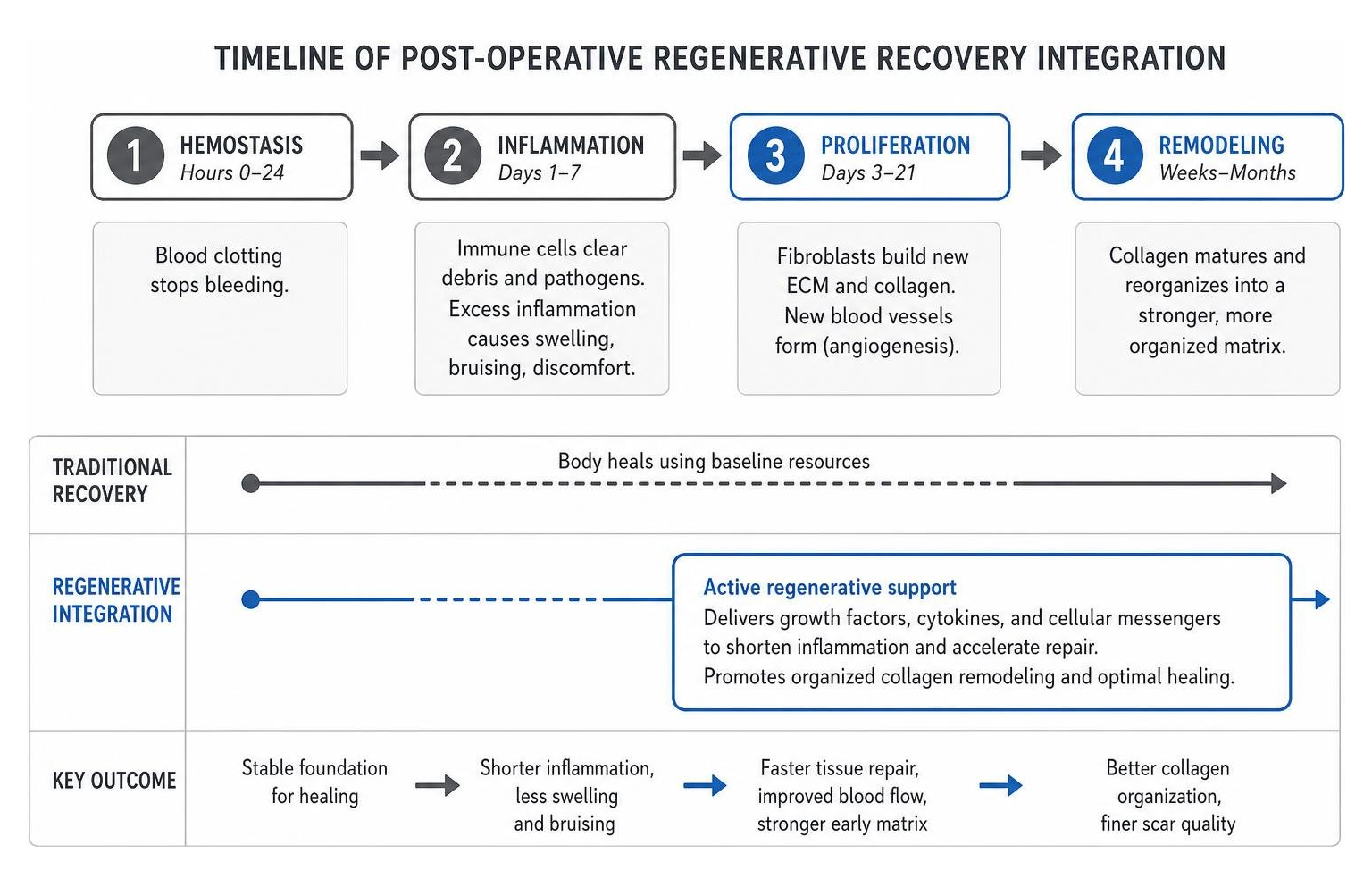
Regenerative therapies intervene dynamically during the proliferation and remodeling phases. By delivering a concentrated payload of growth factors, cytokines, and cellular messengers, we can dramatically shorten the inflammatory phase and accelerate tissue repair. These signaling molecules recruit local stem cells to the site of the incision, stimulate rapid collagen synthesis, and promote organized tissue remodeling rather than the chaotic collagen deposition that leads to thick, visible scars.
By actively guiding these cellular behaviors, we can help our patients achieve a faster, more comfortable recovery with optimized aesthetic results. For more detailed insights into how these biological processes work, explore our comprehensive guide on regenerative medicine healing.
Which Regenerative Therapies Are Most Effective for Facelift and Eyelid Surgery Recovery?
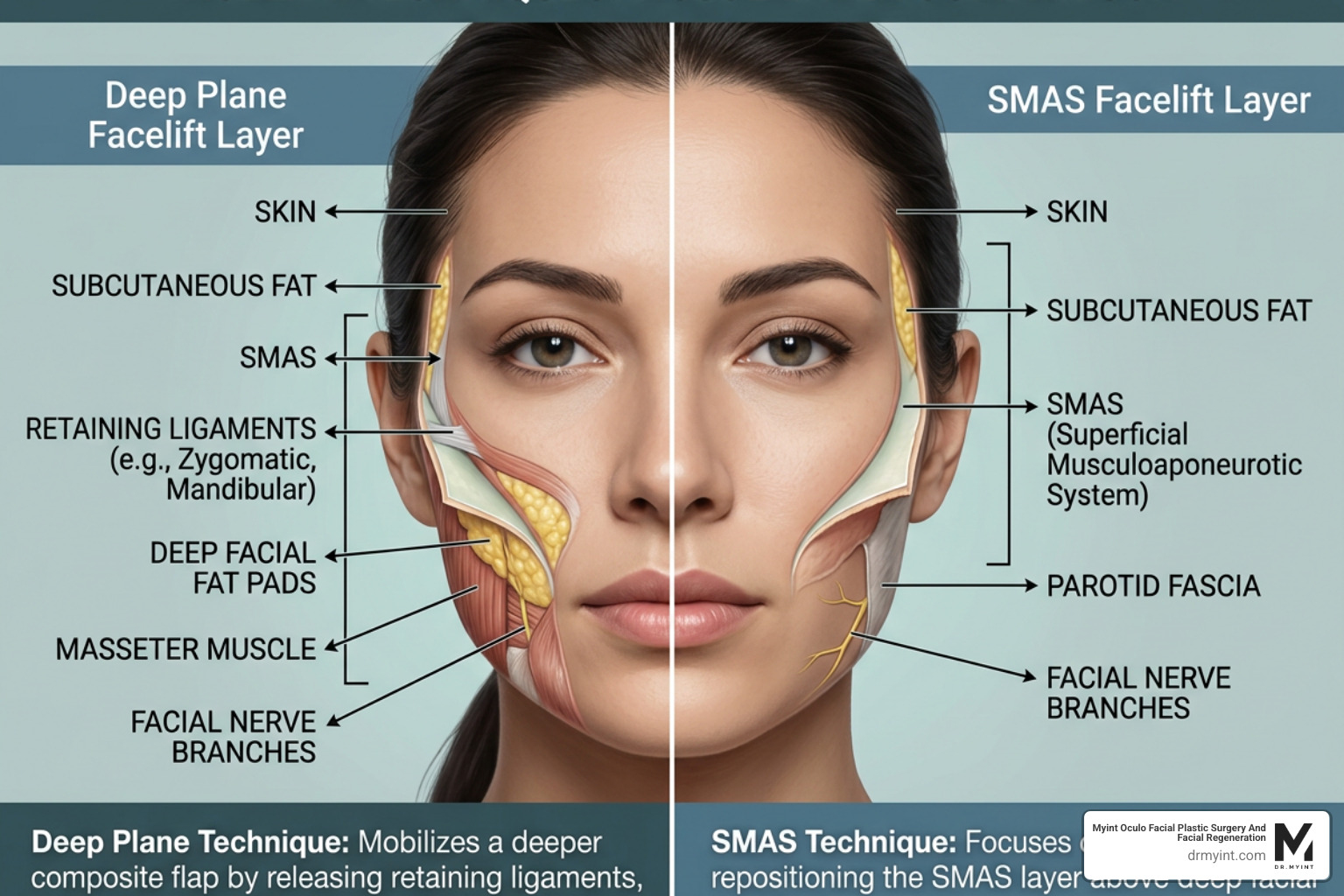
When recovering from advanced facial procedures like a deep plane facelift or a delicate eyelid lift (blepharoplasty), we utilize a curated selection of highly effective regenerative therapies. Each of these treatments serves a distinct biological purpose, and they work synergistically when integrated into a comprehensive recovery plan.
| Regenerative Therapy | Primary Source | Key Biological Mechanism | Primary Recovery Benefit |
|---|---|---|---|
| Platelet-Rich Plasma (PRP) / PRP Gel | Autologous (Patient’s own blood) | Releases high concentrations of PDGF, TGF-β, and VEGF via a fibrin scaffold | Accelerates early wound closure, minimizes bruising, and stabilizes incisions |
| Autologous Fat Grafting (Microfat & Nanofat) | Autologous (Patient’s own adipose tissue) | Delivers viable adipose-derived stem cells (ADSCs) and structural matrix | Restores youthful volume, improves skin elasticity, and enhances flap survival |
| Exosome Therapy | Allogeneic (Certified stem cell culture) | Cell-free intercellular signaling via targeted microRNAs and proteins | Rapidly dampens inflammation, accelerates angiogenesis, and prevents scarring |
| Hyperbaric Oxygen Therapy (HBOT) | Ambient (100% pressurized oxygen) | Elevates tissue oxygen tension, driving cellular metabolism and reducing edema | Dramatically reduces post-operative swelling and prevents tissue ischemia |
Platelet-Rich Plasma (PRP) and PRP Gel
Platelet-Rich Plasma (PRP) is created by drawing a small sample of your blood and spinning it in a specialized centrifuge to isolate and concentrate platelets. When applied to surgical incisions, these platelets release crucial growth factors, including Platelet-Derived Growth Factor (PDGF) and Transforming Growth Factor-beta (TGF-β).
To maximize these benefits, we can formulate PRP into a structured PRP Gel. This gel creates a natural fibrin scaffold that holds the healing growth factors at the treatment site longer, allowing for sustained, continuous tissue repair. This is particularly beneficial for sealing the delicate incisions of an eyelid lift or along the hairline and ears after a facelift.
Autologous Fat Grafting: Microfat and Nanofat
Often referred to as “liquid gold,” autologous fat harvested via gentle liposuction is one of the most potent sources of regenerative cells in the human body. We process this fat into two distinct forms:
- Microfat: Used primarily to restore structural volume to depleted areas of the face, such as the cheeks, temples, and under-eye hollows.
- Nanofat: Emulsified and filtered fat that contains no viable fat cells but is incredibly rich in adipose-derived stem cells (ADSCs), growth factors, and extracellular matrix components. We use nanofat as a superficial skin treatment to dramatically improve skin texture, elasticity, and overall radiance.
Combining these fat transfer techniques with a surgical lift provides a comprehensive approach to facial rejuvenation, restoring both youthful contours and skin quality. To learn more about this dual-benefit approach, read about the benefits of a stem cell facial fat transfer for a refreshed appearance.
Exosome Therapy
Exosomes represent the absolute cutting edge of cell-free regenerative medicine. These microscopic extracellular vesicles (measuring 30 to 150 nanometers) act as the body’s cellular postal system, carrying a highly concentrated payload of proteins, lipids, and microRNAs directly to recipient cells. Because they do not contain cellular DNA, they carry no risk of graft-versus-host rejection. When applied topically or injected during recovery, exosomes deliver precise instructions to local cells to rapidly suppress inflammation, build new blood vessels, and synthesize healthy collagen.
Hyperbaric Oxygen Therapy (HBOT)
During a deep plane facelift, the facial tissues are elevated and repositioned, which temporarily disrupts the local microscopic blood supply. Hyperbaric Oxygen Therapy (HBOT) involves breathing 100% pure oxygen inside a pressurized chamber. This process increases the amount of oxygen dissolved in your blood plasma by up to 10- to 15-fold, delivering vital oxygen deep into the healing facial flaps.
HBOT supercharges cellular metabolism, stimulates rapid angiogenesis (new blood vessel growth), and dramatically reduces post-operative swelling (edema) by promoting efficient lymphatic drainage.
Pairing Regenerative Therapies with Deep Plane Facelifts and Eyelid Lifts
We specialize in pairing these advanced therapies with deep plane facelifts and eyelid surgeries to achieve unparalleled recovery outcomes. By applying PRP Gel and exosomes directly to the deep tissue planes and delicate eyelid incisions, we can significantly reduce the bruising and swelling that typically accompany these procedures.
Furthermore, integrating advanced skincare protocols post-surgery ensures that your skin’s surface heals as beautifully as the underlying structures. For a deeper look at this synergy, discover how regenerative skincare boosts your facelift results and explore our essential guide to regenerative medicine for facelift recovery.
What Does the Scientific Evidence Say About Exosomes and Stem Cells in Post-Surgical Healing?
The integration of regenerative therapies into plastic surgery is backed by a rapidly growing body of robust preclinical and clinical scientific literature. Researchers and clinicians worldwide are demonstrating that these therapies fundamentally alter the biology of wound healing.
One of the most significant discoveries in regenerative medicine is the potency of adipose (fat) tissue. Peer-reviewed research published in journals like Frontiers in Medicine highlights that adipose tissue yields up to 500-fold more mesenchymal stromal cells (MSCs) per gram compared to bone marrow. This makes autologous fat harvesting not only minimally invasive but also an incredibly rich source of regenerative power for facial reconstruction and rejuvenation.
Clinical evidence also supports the scar-reducing capabilities of these therapies. A landmark randomized controlled trial investigating exosome-enriched fat grafting reported a 42% reduction in scar thickness, with highly durable aesthetic outcomes maintained at the 12-month post-operative mark.
Furthermore, in preclinical diabetic wound models, which represent some of the most challenging healing environments, exosome treatments were associated with up to a 50% decrease in collagen accumulation compared to untreated controls. This reduction is highly significant because it demonstrates the ability of exosomes to prevent the chaotic, excessive collagen deposition that leads to rigid, hypertrophic scars, promoting instead a soft, compliant, and nearly invisible scar line.
Another critical component of rapid recovery is angiogenesis, the formation of new blood vessels to restore circulation to surgical flaps. Scientific studies have shown that hypoxia-conditioned exosomes increased vessel density by approximately 40% compared to normoxic exosomes. By culturing stem cells in a low-oxygen environment (mimicking the ischemic environment of a surgical wound), the resulting exosomes are naturally enriched with pro-angiogenic signals like Vascular Endothelial Growth Factor (VEGF), which rapidly rebuilds the microcirculation in a repositioned facial flap.
Currently, over 20 registered clinical trials are actively investigating exosome-based interventions specifically for wound healing and scar reduction. In clinical practice, we utilize these findings to apply exosomes preemptively. Rather than waiting for healing complications to arise, applying exosomes directly to high-tension surgical incisions, such as those around the ears in a deep plane facelift, helps build a healthy healing foundation from day one, drastically reducing the risk of skin flap necrosis and optimizing the final aesthetic outcome.
To explore the deep scientific literature supporting these advancements, we invite you to read the comprehensive clinical review on exosome-mediated advancements in plastic surgery as well as the detailed review of the role of exosome therapy in reconstructive surgery.
How Do You Integrate Regenerative Therapies Into Your Post-Operative Recovery Timeline?
To achieve the best possible results, we integrate regenerative therapies into a highly structured, step-by-step post-operative timeline. This comprehensive approach begins weeks before your surgery and continues for several months post-operatively to support every phase of tissue remodeling.

Phase 1: Pre-Operative Preparation (2 to 4 Weeks Before Surgery)
A successful recovery starts before the first incision is made. During this phase, we focus on optimizing your cellular health and preparing the tissue bed:
- Nutritional Optimization: We guide you on specific dietary protocols rich in anti-inflammatory foods, high-quality proteins, and essential vitamins (such as Vitamin C and Zinc) that serve as the building blocks for collagen synthesis. Learn more about the best foods to eat for healing.
- Mitochondrial Support: We may recommend targeted supplements, such as NAD+ precursors, to boost cellular energy (ATP) production, ensuring your cells have the energy required to handle the physical stress of surgery.
- Surgical Preparation: We provide you with detailed instructions on which medications, supplements, and lifestyle habits to avoid to minimize bleeding and bruising. Review our guide on what to do before surgery.
Phase 2: Day of Surgery
During your procedure, we actively apply regenerative elements directly into the surgical site:
- Deep Plane Application: After releasing and repositioning the deep facial tissues during a deep plane facelift, we apply autologous PRP or highly purified, clinical-grade exosomes directly to the deep tissue planes before closing.
- Incision Sealing: We apply PRP Gel or topical exosomes directly along the delicate incisions of your facelift and eyelid lifts. This provides an immediate biological seal, dampening the initial inflammatory spike and initiating rapid cellular repair.
Phase 3: Early Post-Op Healing (Days 1 to 7)
The first week is critical for managing swelling and supporting tissue perfusion:
- Hyperbaric Oxygen Therapy (HBOT): We recommend starting HBOT sessions within 24 to 48 hours after surgery. Patients typically undergo 3 to 5 sessions spaced 1 to 2 days apart. This flooding of the tissues with pressurized oxygen dramatically reduces acute swelling, accelerates lymphatic drainage, and supports the metabolic demands of the healing facial flaps.
- Rest and Gentle Care: We monitor your healing closely during your initial post-op visits, ensuring that incisions are clean and healing beautifully.
Phase 4: Tissue Proliferation and Early Remodeling (Weeks 2 to 4)
As acute swelling subsides, we transition your care to support structural healing and skin quality:
- Medical-Grade Regenerative Skincare: We introduce specialized topical skincare regimens, such as those featuring growth factors and peptides, to support the skin’s barrier and promote ongoing collagen synthesis.
- Targeted Peptide Therapies: Under close medical supervision, we may incorporate specific signaling peptides (such as GHK-Cu) to support tissue repair and reduce residual inflammation.
- Understanding the Timeline: For a detailed breakdown of what to expect during these initial weeks, consult our resources on what to expect before and after a facelift and explore neck lift recovery timelines.
Phase 5: Long-Term Maturation (Months 2 to 6)
During this final phase, the newly formed collagen undergoes structural maturation:
- Scar Optimization: We continue to monitor your incision lines, utilizing targeted non-surgical treatments like nanofat skin enhancement or light-based therapies if needed to ensure scars flatten and fade seamlessly into the natural contours of your skin.
- Ongoing Support: We remain your partners in recovery, providing continuous guidance to maintain your rejuvenated, natural-looking results for years to come. Explore our complete library of patient recovery resources to support you every step of the way.
What Are the Safety Considerations, Risks, and Regulatory Status of These Advanced Therapies?
While the clinical benefits of regenerative medicine are profound, patient safety remains our absolute highest priority. Navigating this rapidly evolving field requires a deep understanding of the regulatory landscape and the scientific standards required for safe clinical application.
As of July 2026, the United States Food and Drug Administration (FDA) maintains a strict regulatory stance on cellular and exosome therapies. Currently, no exosome therapies are approved by the FDA for general marketing, though several high-quality Investigational New Drug (IND) applications are undergoing active clinical trials. In contrast, autologous therapies, such as PRP and fat grafting, are regulated under the FDA’s Human Cells, Tissues, and Cellular and Tissue-Based Products (HCT/P) guidelines, which permit their use when they are minimally manipulated and intended for homologous use during the same surgical procedure.
One of the most significant challenges in the industry is what scientists call the “black box” of exosome manufacturing. Peer-reviewed reviews indicate that over 60% of published studies and commercial preparations lack standardized isolation protocols. This lack of standardization means that many products available on the market suffer from substantial and unpredictable variations in vesicle purity, potency, and biological efficacy. Laboratory-grade isolation methods can co-isolate protein and lipoprotein contaminants, which can trigger unwanted inflammatory reactions.
Because of this variability, sourcing unregulated, gray-market regenerative materials online or from uncertified vendors poses severe safety risks, including severe bacterial infections, adverse immune reactions, and compromised surgical outcomes.
To ensure the highest standards of safety and efficacy, patients must choose a board-certified, dual-fellowship trained plastic surgeon who possesses specialized expertise in facial regeneration.
At Myint Oculo Facial Plastic Surgery And Facial Regeneration, we only utilize regenerative materials sourced from highly reputable, GMP-compliant (Good Manufacturing Practice), and certified laboratory facilities. Dr. Myint’s rare dual-fellowship training and over 20 years of dedicated expertise in regenerative facial procedures ensure that every therapy integrated into your recovery plan is scientifically validated, meticulously prepared, and administered with the highest level of surgical precision.
What Are the Most Common Questions About Regenerative Plastic Surgery Recovery?
How much does regenerative medicine actually reduce facelift recovery time?
A standard deep plane facelift typically requires 10 to 14 days for patients to feel comfortable presenting socially, primarily due to swelling and bruising. By integrating a customized regenerative recovery protocol—combining autologous PRP, exosome therapy, and hyperbaric oxygen therapy (HBOT)—we frequently reduce this downtime by 30% to 50%.
HBOT and PRP work synergistically to rapidly clear acute inflammatory debris, accelerate lymphatic drainage, and speed up the resolution of bruising, allowing our patients to return to their normal daily activities and social lives much faster and with significantly less discomfort.
Are exosome and stem cell therapies safe for post-surgical healing?
Yes, when administered under strict medical supervision using appropriate protocols. Autologous therapies—such as Platelet-Rich Plasma (PRP) and fat grafting—utilize your body’s own biological materials, meaning they carry zero risk of allergic reaction or graft rejection.
For allogeneic therapies like exosomes, safety depends entirely on sourcing. We only use highly purified, cell-free exosomes processed in state-of-the-art, FDA-compliant, and GMP-certified laboratories. These commercial-grade preparations undergo rigorous screening and sterilization to ensure they are completely free of cellular DNA, pathogens, and impurities, providing a highly consistent and safe therapeutic profile.
Can regenerative therapies prevent scarring after an eyelid lift?
While no surgical procedure can guarantee a completely scarless outcome, regenerative therapies are incredibly effective at minimizing scar visibility, especially along the delicate skin of the eyelids.
By delivering targeted signaling molecules directly to the healing incisions, these therapies precisely balance the ratio of matrix metalloproteinases (MMPs) and tissue inhibitors of metalloproteinases (TIMPs). This biological balance prevents the excessive, chaotic collagen deposition that leads to thick, raised scars, promoting instead the organized, linear tissue remodeling that results in a soft, flat, and virtually imperceptible incision line.
How Can You Get Started With a Regenerative Plastic Surgery Recovery Plan?
The integration of regenerative medicine with state-of-the-art surgical techniques represents a monumental leap forward in aesthetic surgery. By combining the structural restoration of a deep plane facelift or eyelid lift with the biological healing power of PRP, fat grafting, exosome therapy, and hyperbaric oxygen, we are able to offer our patients the best of both worlds: stunning, natural-looking aesthetic results and a faster, more comfortable recovery.
We believe that surgery is not just a single procedure, but a comprehensive healing journey. Achieving optimal, long-lasting results requires a personalized, physician-guided recovery protocol tailored to your unique anatomy, lifestyle, and aesthetic goals.
If you are ready to explore how an advanced, regenerative-assisted surgical plan can transform your rejuvenation experience, we invite you to take the first step. Contact our team today to schedule an in-depth, personal consultation with Dr. Shoib Myint at one of our convenient locations in Las Vegas, NV or Beverly Hills, CA.