

Detailed Guide to the Neck Lift Procedure
September 21, 2026
What a Neck Lift Can Improve
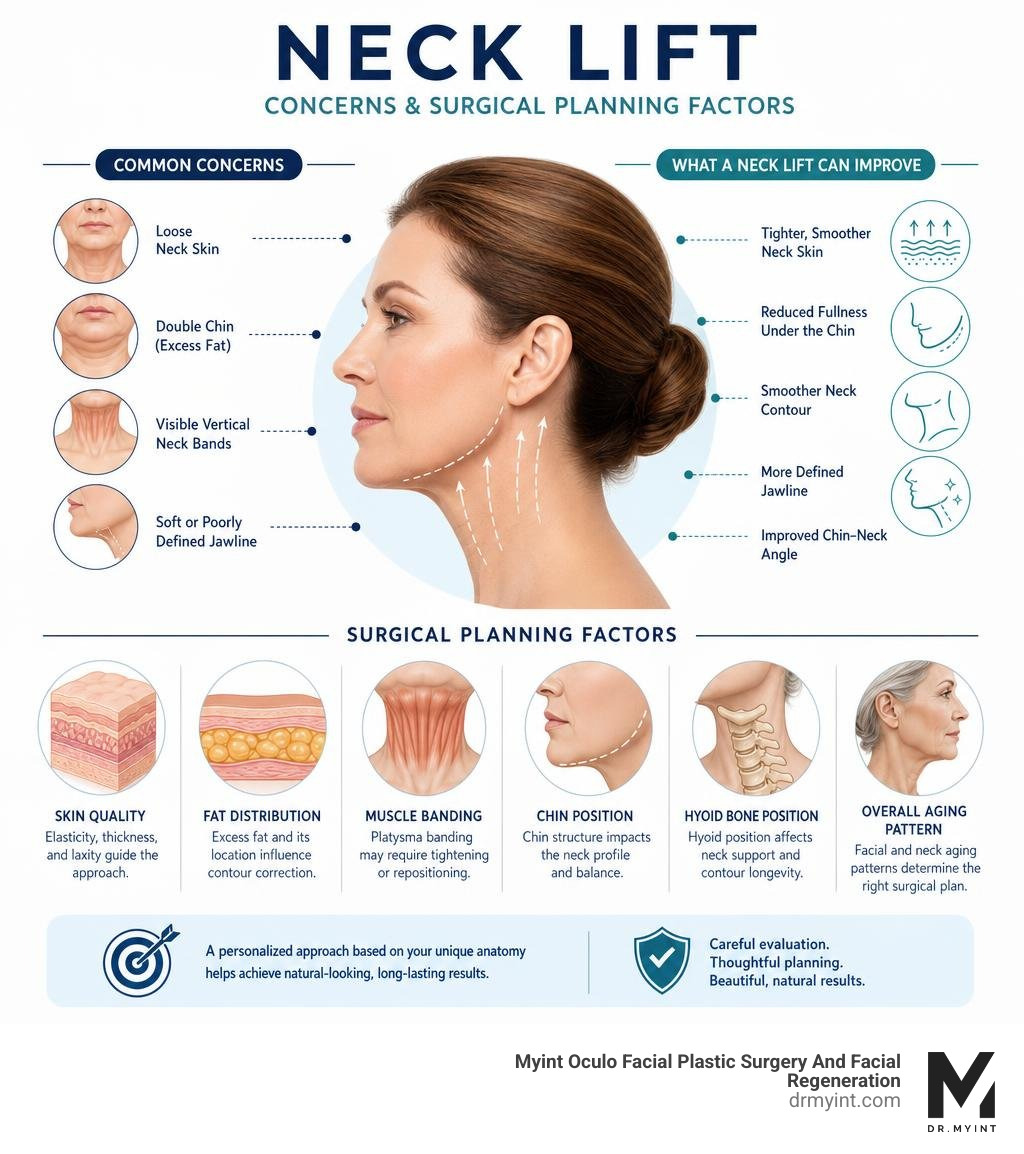
A neck lift is a surgical procedure that improves loose neck skin, a double chin caused by excess fat, visible vertical neck bands, and a soft or poorly defined jawline. It can restore a cleaner angle between the chin and neck, often while supporting a more balanced lower-face appearance.
The right approach depends on what is causing the concern. Some patients mainly need fat removal, while others need tightening of the platysma muscle, removal of excess skin, or a combined facelift and neck lift to address jowls and deeper tissue descent. A careful exam of skin quality, fat distribution, muscle banding, chin position, and hyoid bone position helps determine whether surgery can provide a natural-looking improvement.
A neck lift can create long-lasting contour changes, but it does not stop the normal aging process. This guide explains the anatomy, surgical options, safety considerations, preparation, and recovery milestones that matter when considering lower facial rejuvenation.
Dr. Shoib Myint is a board-certified, fellowship-trained oculofacial plastic and reconstructive surgeon with more than 20 years of experience in facial and neck procedures. His approach to neck lift surgery centers on careful planning, structural support, and results that look refreshed rather than overdone.
Anatomy and Aesthetic Goals of a Neck Lift
The anatomy of the neck consists of several distinct layers: the delicate outer skin, the subcutaneous fat layer, the broad superficial muscle sheet known as the platysma, the deep subplatysmal fat, and underlying vital structures. In youth, these tissues sit snugly against the bony framework of the jaw and cervical spine.
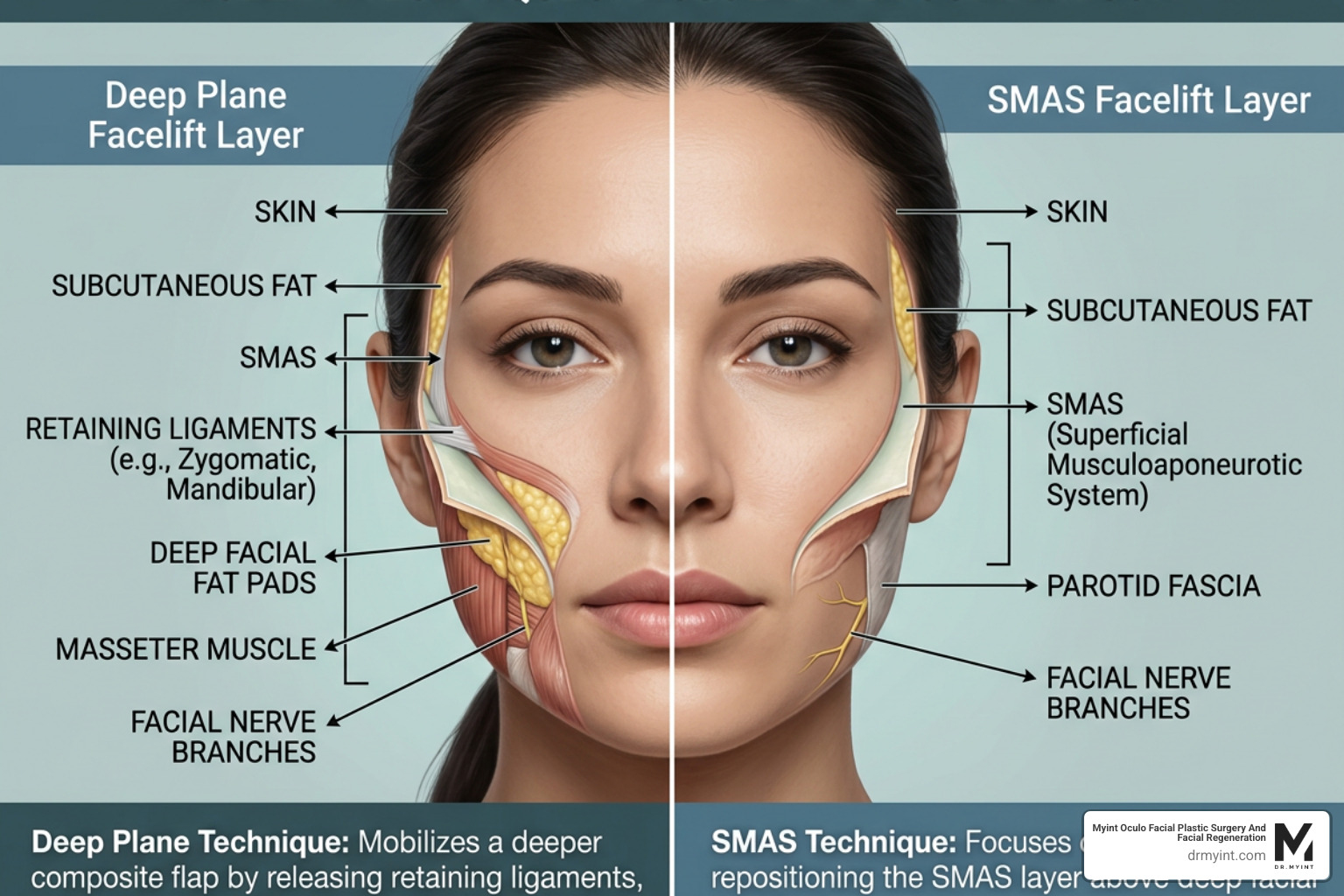
As time passes, structural changes occur across every single layer. The skin loses collagen and elasticity, the platysma muscle separates in the midline, and deeper fat compartments may descend. Understanding how does a neck lift get rid of loose neck skin begins with recognizing that true rejuvenation requires reshaping these deeper anatomical layers rather than simply pulling the skin tight. The superficial musculoaponeurotic system (SMAS) of the face continues downward directly into the neck as the platysma muscle, making the neck and lower face an interconnected continuum.
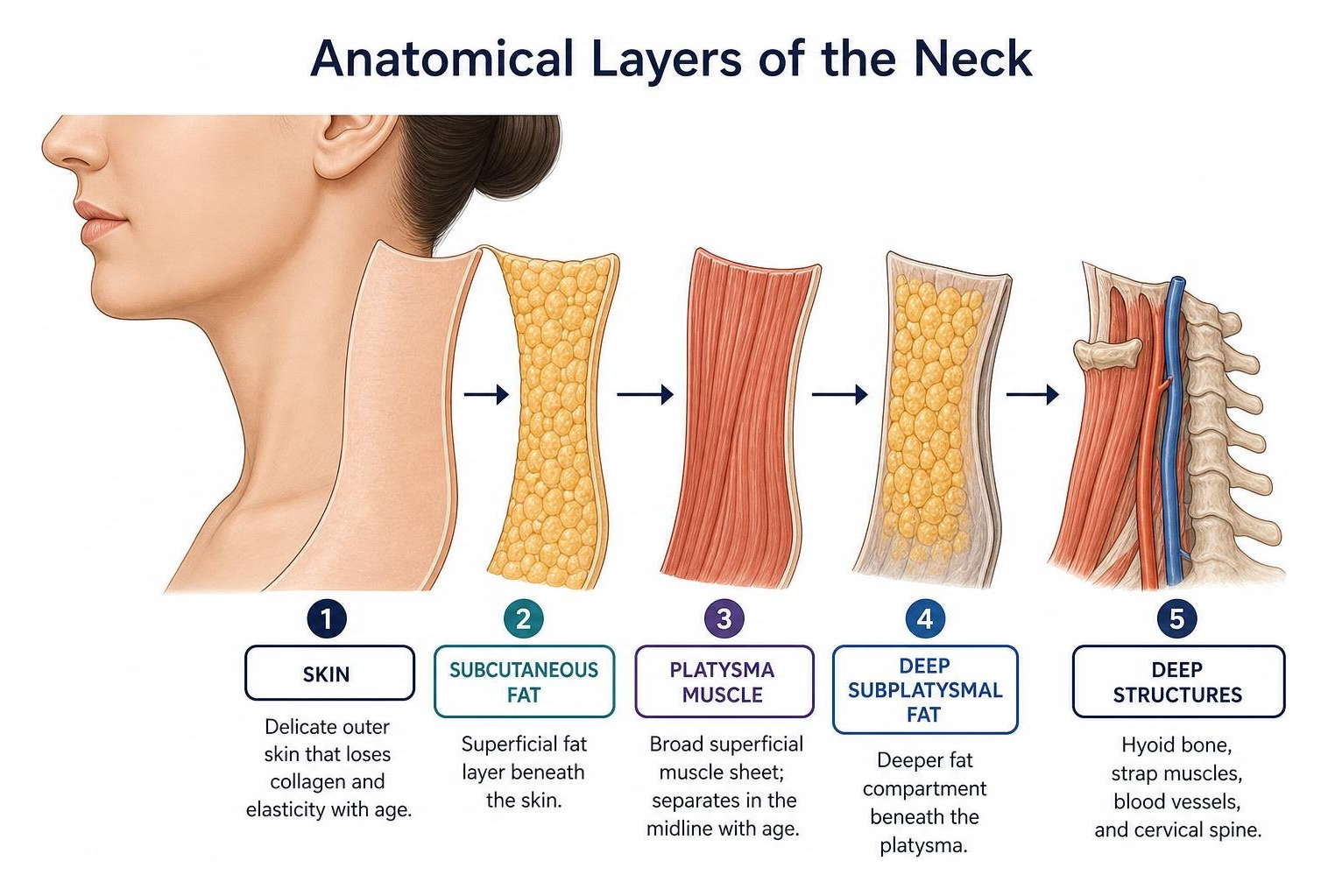
According to peer-reviewed scientific research on neck rejuvenation, long-term aesthetic success relies on treating both the superficial fat above the platysma and the deep structures beneath it.
Defining the Ideal Cervical Angle and Structural Landmarks
A youthful lower profile is characterized by distinct anatomical landmarks. The jawline should present a clean, uninterrupted line from the chin to the angle of the mandible. The sternocleidomastoid muscles create subtle lateral definition, while the hyoid bone, located high in the neck, allows for a crisp transition beneath the chin.
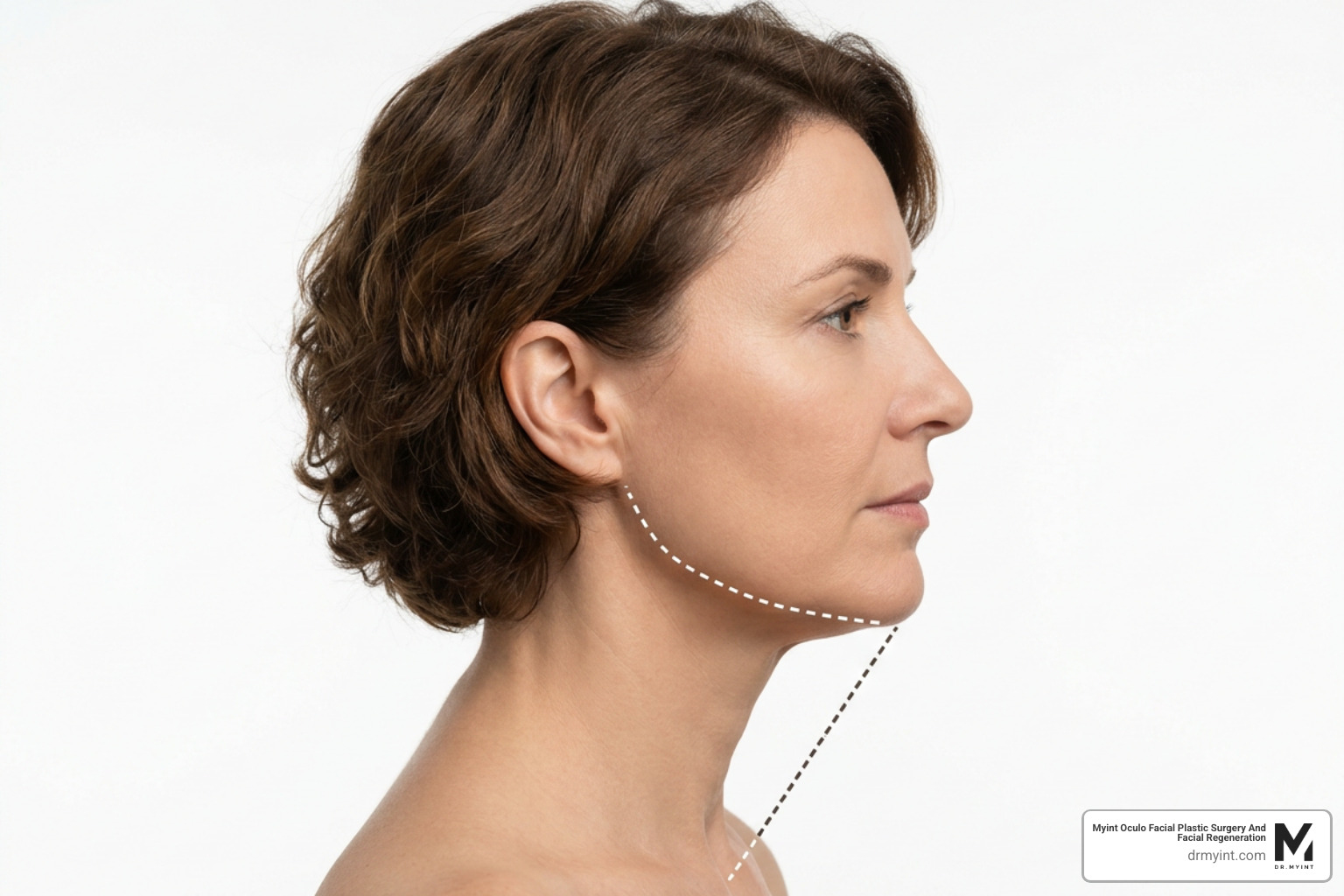
In clinical terms, surgeons evaluate the cervicomental angle, which is the angle formed between the horizontal plane under the chin and the vertical plane of the neck. An ideal angle measures between 90 and 105 degrees. When this angle blurs due to tissue descent or genetic bone structure, the entire profile loses definition.
Addressing Platysmal Bands and Submental Fullness
Vertical neck bands occur when the two medial edges of the platysma muscle separate and lose tone, a condition called platysmal dehiscence. When speaking or expressing emotion, these separated muscle borders project outward as visible cords.
Simultaneously, fullness under the chin can stem from two distinct fat layers:
- Subcutaneous fat: Located directly beneath the skin and above the muscle.
- Subplatysmal fat: Located deeper, beneath the platysma muscle layer.
Addressing these issues allows patients to reduce your double chin with neck lift surgery. In some individuals, prominent submandibular salivary glands or thick anterior digastric muscles also contribute to fullness, requiring precise surgical differentiation during clinical planning.
Clinical Evaluation and the Dedo Classification System
To customize every procedure, plastic surgeons rely on standardized diagnostic frameworks. The most widely respected tool is the Dedo classification system, which categorizes cervical aging based on which anatomical components are involved. Determining how to know whether neck lift surgery is right for you starts with identifying your specific Dedo classification.
| Dedo Class | Primary Anatomical Characteristics | Recommended Surgical Approach |
|---|---|---|
| Class I | Normal youthful neck; excellent skin tone and defined cervicomental angle | Preventative care or subtle contouring |
| Class II | Isolated skin laxity without significant excess fat or muscle separation | Submental skin tightening and redraping |
| Class III | Submental and cervical fat accumulation with good underlying muscle tone | Submental liposuction or targeted fat excision |
| Class IV | Platysmal banding with prominent vertical cords | Anterior midline platysmaplasty (muscle repair) |
| Class V | Retrognathia or microgenia (receded chin framework) | Neck lift combined with structural chin enhancement |
| Class VI | Low-lying hyoid bone creating an intrinsically blunt angle | Deep structural contouring with realistic anatomical boundaries |
Platysmaplasty and Deep Structural Restoration
When vertical muscle bands are present, a platysmaplasty forms the core of the surgical plan. Through a small, discreet incision hidden within the natural crease beneath the chin, the surgeon gains direct access to the separated edges of the platysma muscle.
During a corset platysmaplasty, the surgeon mobilizes these medial muscle edges, trims excess tissue if necessary, and meticulously sutures them together down the midline. This acts like a internal hammock, elevating the deeper floor of the mouth. If you wonder can a neck lift remove excess fat and skin, the answer lies in this combined approach: deep subplatysmal fat is carefully sculpted, the muscle corset is cinched tight, and the lateral platysma borders are suspended to the firm mastoid fascia behind the ears to create sharp lateral definition.
Customizing the Neck Lift for Structural Facial Harmony
A neck lift rarely exists in absolute isolation because facial anatomy ages as a unified system. For individuals presenting with jowls or midface descent, a combined deep plane approach elevates the underlying SMAS and neck structures in one continuous layer.
Patients often ask is it possible to combine neck lift and facelift surgery, and for moderate to severe lower facial aging, doing so produces the most natural, harmonious outcome. Furthermore, evaluating bone structure is essential. When a patient presents with a receded lower jaw (retrognathia), the lack of bony projection makes the neck appear heavier. Combining soft tissue contouring with chin augmentation restores proper structural balance. Discussing what is the best age for a neck lift depends less on chronological age and far more on these individual structural factors.
Surgical Precision and Neurovascular Anatomy
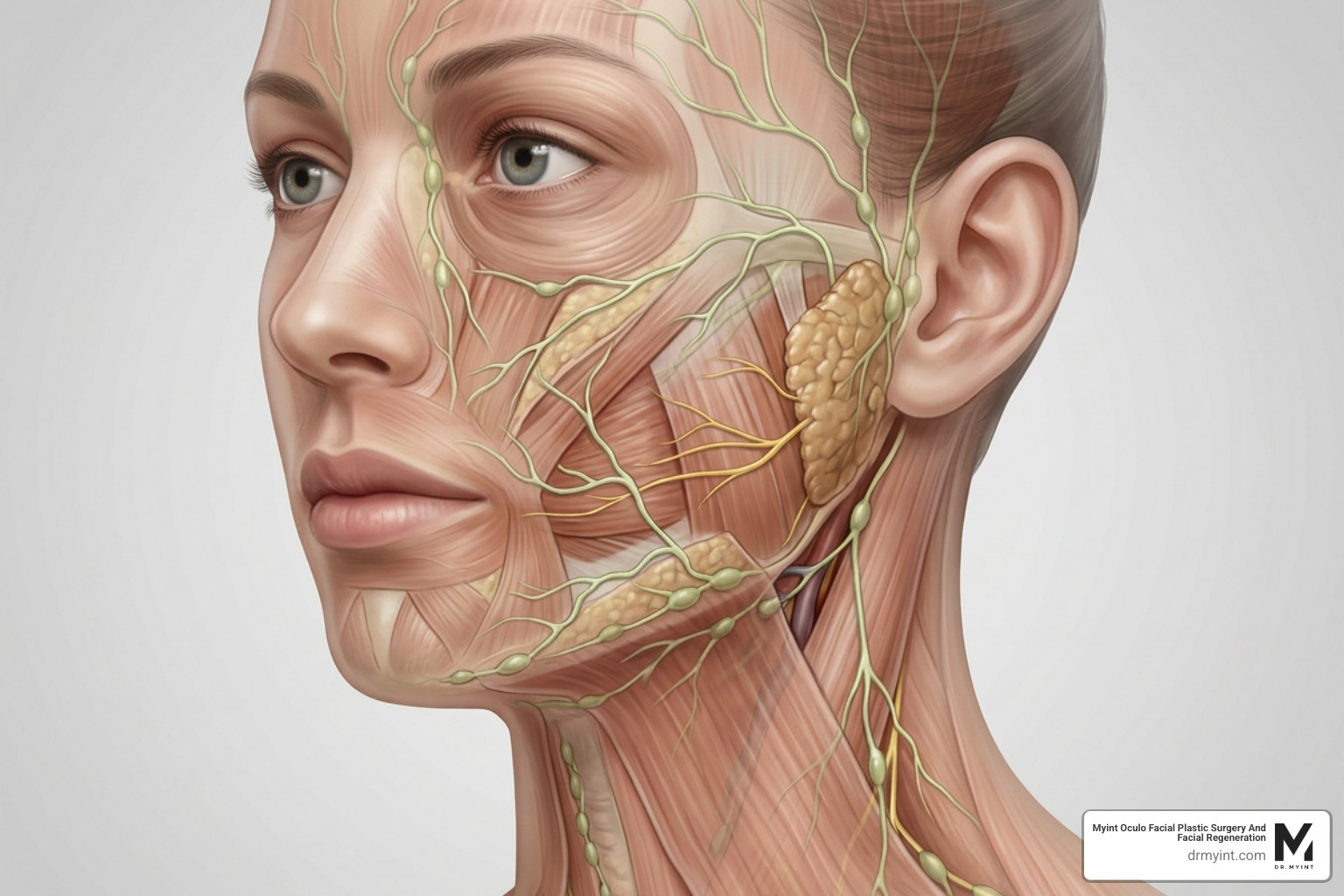
The neck contains an intricate network of blood vessels, sensory nerves, and motor nerves that control facial expressions. Modern aesthetic surgery demands rigorous anatomical knowledge to achieve stunning rejuvenation while respecting these vital pathways.
According to authoritative scientific research on cervicofacial rhytidectomy, rhytidectomy operations are among the most frequently performed cosmetic procedures, requiring precise navigation around well-defined anatomical landmarks.

Key anatomical structures respected during surgery include:
- Great Auricular Nerve (GAN): Crossing over the sternocleidomastoid muscle at McKinney’s point, this sensory nerve provides feeling to the earlobe and lower ear.
- Marginal Mandibular Nerve: A motor branch of the facial nerve that travels along the lower border of the mandible, controlling downward movement of the lower lip.
- Cervical Motor Branches: Nerve fibers that innervate the platysma muscle.
- External Jugular Vein: A primary superficial vein running vertically across the lateral neck.
Preserving Surgical Planes and Tissue Integrity
Navigating these delicate structures involves keeping surgical dissection strictly within established anatomical planes. Surgeons elevate skin flaps with a uniform, protective layer of subcutaneous fat to maintain the natural subdermal blood supply, which supports smooth and healthy tissue healing.
Surgeons also follow meticulous intraoperative protocols throughout the procedure to maintain tissue balance and ensure an optimal, gentle recovery environment.
Incision Placement and Natural Contour Design
Artful incision design ensures that surgical access points heal discreetly within natural anatomical shadow lines. The submental incision sits tucked tightly within the crease under the chin. Lateral incisions travel around the earlobe, ascend into the natural groove behind the ear (the postauricular sulcus), and taper gently into the hairline.
Expert surgical technique focuses on balanced aesthetic refinement:
- Harmonious Submental Contouring: Surgeons sculpt fat evenly across the central and lateral zones of the neck to maintain a smooth, natural transition under the chin.
- Deep Structural Support: By placing all structural lifting tension strictly on deep muscle layers and anchoring them to firm fascia, the overlying skin drapes naturally without unnecessary surface tension.
To learn more about scar placement and healing, explore how visible are scars after a neck lift.
Preparing for Your Procedure and Recovery Milestones
Proper preparation is vital for an uncomplicated surgical experience and smooth recovery. During a comprehensive preoperative evaluation at the Las Vegas, NV, or Beverly Hills, CA, clinics, the surgical team reviews medical history, structural goals, and daily routine.
Preparation steps include:
- Pausing aspirin, nonsteroidal anti-inflammatory drugs (NSAIDs like ibuprofen), and specific herbal supplements for two weeks prior to surgery.
- Arranging for a responsible adult caregiver to drive you home and assist you during your first 24 to 48 hours.
- Ensuring strict nicotine cessation; patients should read why stopping smoking before neck lift surgery matters to understand how nicotine constricts microvascular blood flow and impairs tissue healing.
Managing Postoperative Swelling and Compression Garments
Following surgery, wearing your supportive compression garment as directed is essential. This soft garment provides gentle, continuous support, minimizes fluid accumulation, and encourages the redraped skin to conform smoothly to its newly sculpted muscular foundation.
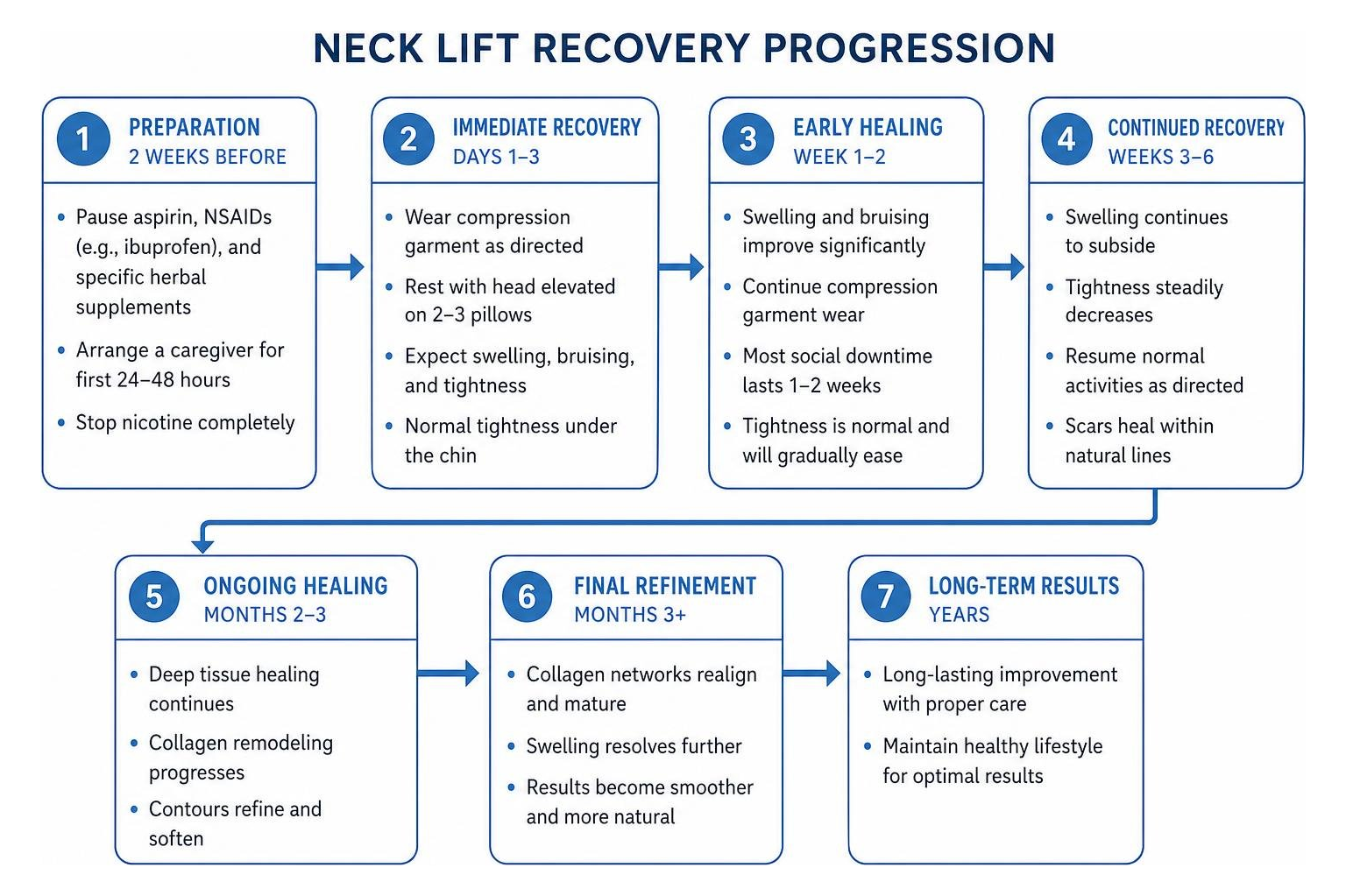
Patients should rest with their head elevated on two to three pillows for the first couple of weeks to facilitate fluid drainage. Understanding when swelling typically subsides after a neck lift and how long neck tightness can last after surgery helps set clear expectations. Sensation of tightness under the chin is entirely normal and confirms that the deep platysma muscle has been securely repositioned.
Postoperative Healing and How Long a Neck Lift Lasts
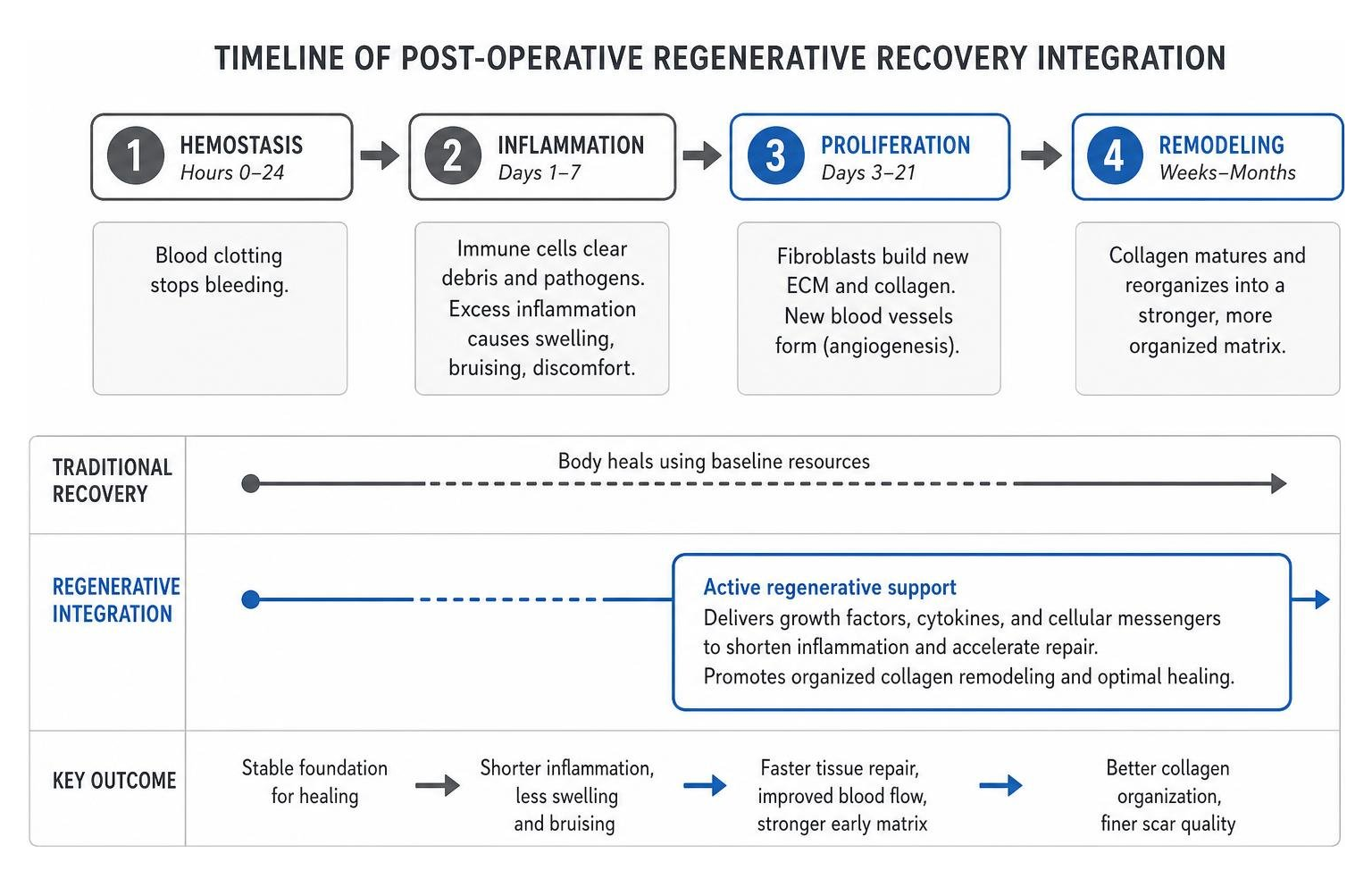
Healing unfolds in distinct physiological phases. Most social downtime lasts roughly one to two weeks, after which initial bruising and early swelling resolve significantly. Deep internal tissue remodeling continues quietly over several months as collagen networks realign and soften.
For detailed milestone guidance, review the expected recovery timeline after a neck lift. While surgery cannot freeze the biological clock, it resets the facial baseline. This overview of how much younger a neck lift can make someone look explains how restoring crisp jawline contours can deliver natural, long-lasting refinement that ages gracefully over time.
Frequently Asked Questions About Lower Facial Rejuvenation
Will a surgical procedure address sagging jowls?
A neck lift provides noticeable improvement to the lower jawline border, but pronounced jowls primarily originate from descending midface fat pads and lax SMAS tissue in the cheeks. For extensive jowling, combining a deep plane facelift with cervical muscle suspension provides the most complete correction. Read this detailed guide to whether a neck lift can improve sagging jowls for an in-depth breakdown.
Is it too early to consider lower facial surgery in my 30s or 40s?
Chronological age is far less important than individual anatomy and genetic tissue laxity. Some patients in their thirties inherit isolated submental fullness or early muscle separation despite having firm, elastic skin.
If you are exploring your options early, review whether neck lift surgery is too soon in your 30s and the best age to consider a facelift or neck lift to see how targeted structural adjustments benefit younger candidates.
How noticeable are surgical incisions after healing?
When incisions are meticulously positioned within natural biological creases and closed without tension, they heal into fine, faint lines that blend seamlessly into surrounding skin.
To explore detailed scar development timelines, review whether a neck lift involves a visible scar and how neck lift scars can look after healing.
Conclusion
Achieving an elegant, natural neck contour requires deep surgical skill, refined aesthetic judgment, and an unwavering commitment to patient safety. Lower facial rejuvenation is not about stretching skin tight; it is about restoring the foundational muscle architecture and structural balance of the face and neck.
At Myint Oculo Facial Plastic Surgery And Facial Regeneration, Dr. Shoib Myint brings rare dual fellowship training and over two decades of dedicated expertise in facial rejuvenation and deep structural restoration. Patients interested in a personalized treatment plan can schedule a consultation for a neck lift at the Las Vegas, Nevada, or Beverly Hills, California, surgical practices.