

Eyelid Lift Surgery: Addressing Your Most Common Concerns
July 28, 2026
Eyelid Lift Common Concerns Addressed: What You Need to Know First
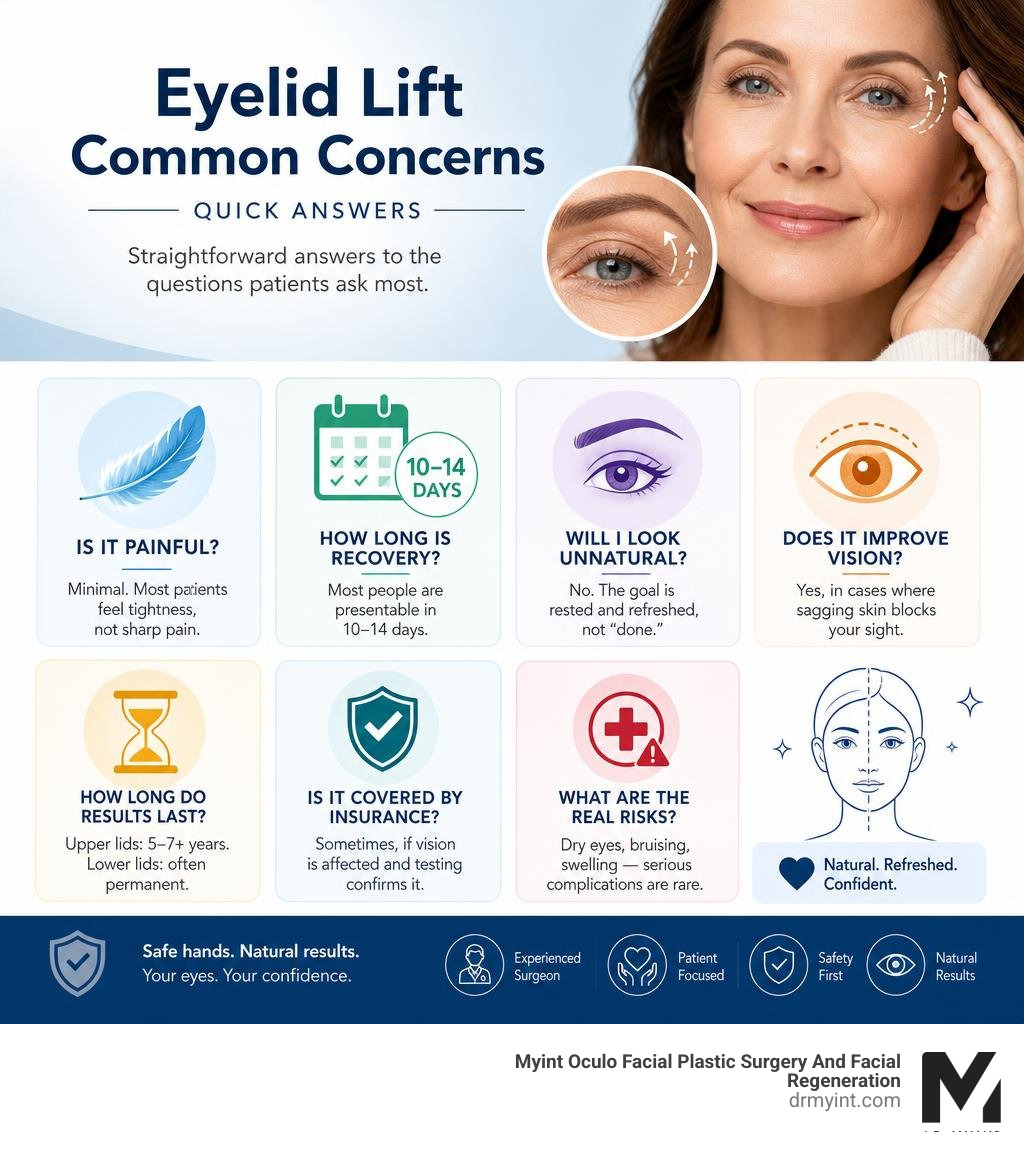
Eyelid lift common concerns addressed in one place — here is a quick overview of what most patients want to know before deciding on surgery:
| Common Concern | Quick Answer |
|---|---|
| Is it painful? | Minimal. Most patients feel tightness, not sharp pain. |
| How long is recovery? | Most people are presentable in 10–14 days. |
| Will I look unnatural? | No. The goal is rested and refreshed, not “done.” |
| Does it improve vision? | Yes, in cases where sagging skin blocks your sight. |
| How long do results last? | Upper lids: 5–7+ years. Lower lids: often permanent. |
| Is it covered by insurance? | Sometimes, if vision is affected and testing confirms it. |
| What are the real risks? | Dry eyes, bruising, swelling — serious complications are rare. |
Drooping eyelids and under-eye bags are among the most common complaints from people in their 40s, 50s, and 60s. The skin around your eyes is the thinnest on your entire face, and it ages faster than anywhere else. Over time, that can mean heavy, hooded lids — or a tired look that no amount of sleep seems to fix.
Blepharoplasty, or eyelid lift surgery, is one of the top five cosmetic surgical procedures in the United States. About 325,000 procedures were performed in 2022 alone — and over 90% of patients report being satisfied with their results. Yet plenty of questions and hesitations are completely understandable before committing to any surgery near your eyes.
This guide walks you through every major concern clearly and honestly — no pressure, just the facts.
I’m Dr. Shoib Myint, a board-certified, fellowship-trained Oculo Facial Plastic and Reconstructive Surgeon with over 20 years of experience and more than 15,000 surgeries performed, including the full range of eyelid procedures where eyelid lift common concerns addressed here reflect real questions from my own patients. My approach is always cautious and natural-first, putting your long-term outcomes above all else.
What is Blepharoplasty and What Does It Treat?
Blepharoplasty is the medical term for eyelid surgery. It is a highly specialized procedure designed to address age-related changes in the upper eyelids, lower eyelids, or both. As we age, our skin loses its elasticity, and the muscles supporting our eyelids begin to weaken. Consequently, fat that normally cushions the eyes can migrate forward, creating puffy bags, while stretched-out skin pools into heavy folds.
This excess, sagging skin is medically known as dermatochalasis. When it affects the upper lids, it can create a hooded appearance that makes you look perpetually exhausted, grumpy, or older than you feel. In severe cases, this tissue can actually hang down over your eyelashes, creating a physical hood that limits how much of the world you can see.
To understand how we approach these issues, it is helpful to Learn the differences between upper and lower blepharoplasty. While both procedures fall under the “eyelid lift” umbrella, they target completely different anatomical structures and concerns. It is also important to clarify the distinction between cosmetic enhancements and functional reconstructive needs. You can explore this further by reading What’s the difference between an eyelid lift and eyelid reconstruction.
A successful blepharoplasty restores a naturally rested, open, and youthful look. For a comprehensive medical overview of what the surgery entails, you can read the resource provided by the Cleveland Clinic on Blepharoplasty (Eyelid Surgery): Details & Recovery.
Upper vs. Lower Blepharoplasty
The eyes may be the windows to the soul, but the upper and lower eyelids require entirely different architectural plans.
- Upper Blepharoplasty: This procedure primarily targets hooded lids. We make a precise incision within the natural crease of your upper eyelid. From there, we carefully remove or reposition excess skin, muscle, and sometimes a small amount of fat. The goal is to clear away the heavy “curtain” of skin, restoring a crisp, visible eyelid platform where you can actually see your eyelashes (and wear makeup comfortably again!).
- Lower Blepharoplasty: This procedure is the gold standard for tackling persistent under-eye bags and puffiness. Instead of focusing on sagging skin alone, lower eyelid surgery addresses the fat pads that have herniated or slipped forward. If you are tired of looking like you carry heavy luggage under your eyes, you can read our detailed guide, Banish the baggage: A guide to under eye bag surgery.
Eyelid Lift Common Concerns Addressed: Aesthetic vs. Functional Benefits
When patients search for eyelid lift common concerns addressed, they often wonder if the procedure is purely cosmetic or if it serves a functional purpose. The truth is, it frequently does both.
Aesthetically, the procedure turns back the clock. By removing the heavy folds and puffiness, we restore the bright, open-eyed expression of your youth. If you are curious about the visual mechanisms behind this change, check out How does blepharoplasty make you look younger.
Functionally, an upper eyelid lift can be life-changing. When severe dermatochalasis causes skin to sag over the lash line, it physically compromises your peripheral vision and upper visual field. Many of our patients in Las Vegas and Beverly Hills do not even realize how much they have been compensating—often by constantly straining their forehead muscles to lift their brows—until the heavy skin is removed. After surgery, their visual field opens up, forehead tension headaches disappear, and daily activities like driving become significantly safer.
Candidacy and Preparing for Eyelid Surgery
Determining if you are an ideal candidate for blepharoplasty requires a detailed, personalized evaluation. While there is no “perfect” age for an eyelid lift—some patients in their 30s seek treatment for genetically heavy lids, while others wait until their 60s—your physical health and eye anatomy are the ultimate deciding factors.
Before making any decisions, it is helpful to self-assess your eyes. You can read about the physical indicators in our article on the Five signs your eyelids are ready for blepharoplasty.
Who is a Good Candidate?
A good candidate is generally a healthy adult who does not have serious, uncontrolled eye conditions. During your consultation, we will thoroughly review your medical history.

One of our primary screening priorities is checking for dry eyes. If you have a history of dry, gritty, or easily irritated eyes, we must proceed with caution. Severe dry eye syndrome can be a strict contraindication for surgery, as blepharoplasty can temporarily worsen dry eye symptoms during the initial healing phase. We often perform quantitative tear measurements (such as Schirmer’s testing) to ensure your eyes have enough natural lubrication to heal safely.
Additionally, having realistic expectations is crucial. Blepharoplasty is incredibly effective at refreshing your eyes, but it will not completely erase crow’s feet, lift sagging eyebrows, or change your fundamental facial structure. We want you to look like a well-rested, vibrant version of yourself, not a different person.
Eyelid Lift Common Concerns Addressed: How to Prepare
Proper preparation is the secret to a smooth, uneventful recovery. When you schedule your procedure at our Las Vegas or Beverly Hills clinics, we provide a comprehensive, step-by-step preparation checklist.
- Medical Evaluation: We may request a clearance from your primary care physician or require routine lab testing to ensure you are safe for anesthesia.
- Medication Adjustments: You must temporarily stop taking blood thinners, aspirin, anti-inflammatory drugs (like ibuprofen), multivitamins, and herbal supplements (such as ginkgo biloba, garlic, and ginseng) for at least two weeks before surgery. These substances can increase your risk of bleeding and bruising.
- Smoking Cessation: If you smoke or use nicotine products, you must stop completely at least four weeks before and after surgery. Nicotine constricts blood vessels, which severely delays wound healing and increases the risk of conspicuous scarring.
- Recovery Prep: Arrange for a trusted friend or family member to drive you home after the procedure and stay with you for the first night. Stock up on preservative-free artificial tears, clean washcloths, and plenty of ice packs.
The Blepharoplasty Procedure: What to Expect
It is completely normal to feel a little nervous about having surgery near your eyes. However, understanding the meticulous, highly controlled nature of the procedure can help put your mind at ease.
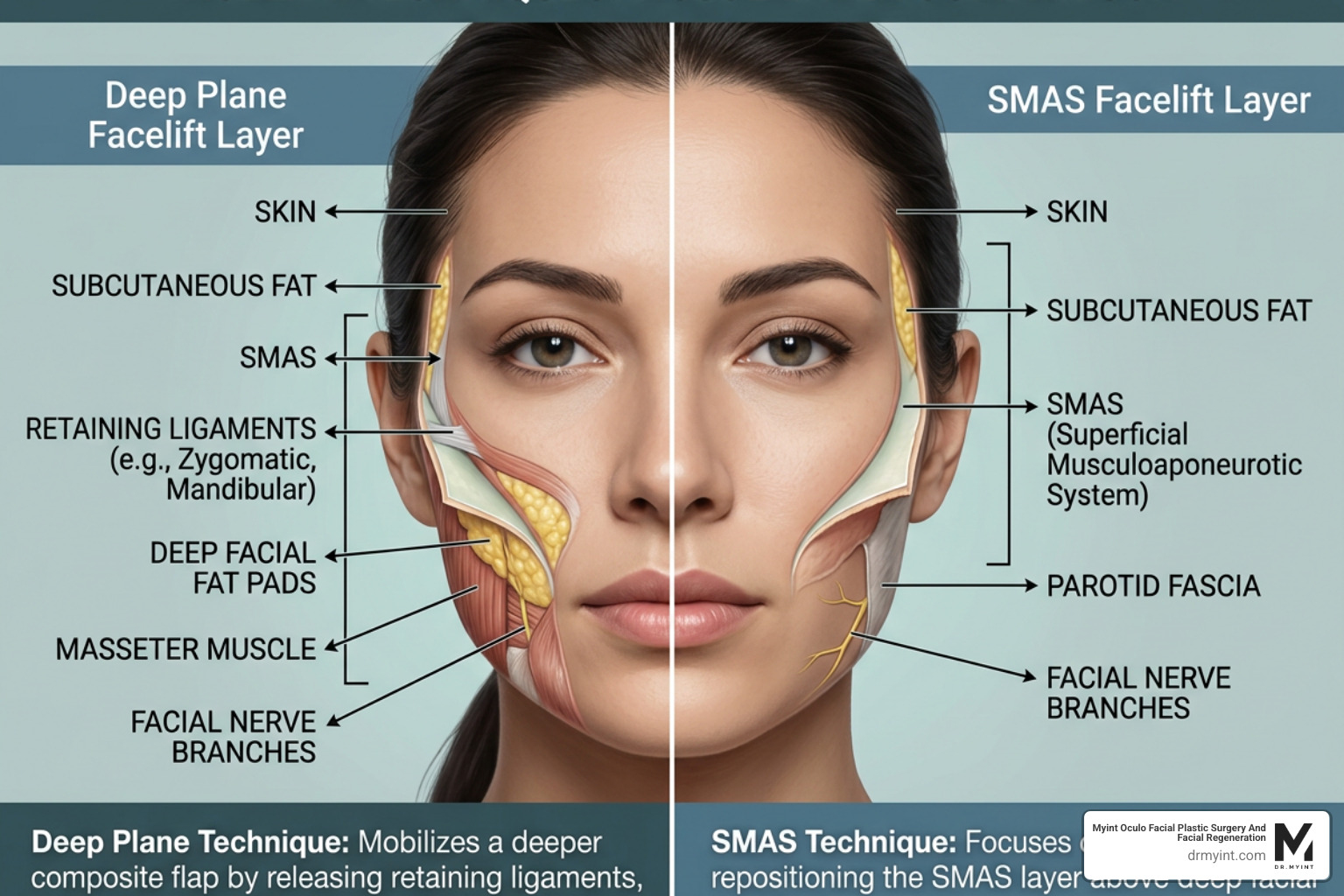
Modern blepharoplasty is highly customized. In the past, surgeons routinely cut away large amounts of skin, muscle, and fat, which sometimes left patients with a hollow, “surprised” look. Today, our philosophy centers on tissue preservation and fat repositioning. Instead of aggressively scooping out the protective fat pads around your eyes, we carefully drape and shift that fat to fill in hollow areas, such as the tear troughs. This preserves the natural, youthful volume of your face.
To see how advanced techniques compare to traditional methods, you can read How is a deep plane eyelid lift different than regular blepharoplasty. For patients experiencing significant volume loss under the eyes, we might also discuss specialized volume restoration; learn more about this approach in our article on When should you consider fat transfer blepharoplasty.
Procedure Steps and Duration
On the day of your surgery, we prioritize your absolute comfort. Local anesthesia combined with light oral sedation is the gold standard for isolated upper blepharoplasty. You will be completely relaxed and pain-free, yet awake enough to follow simple instructions (like gently opening and closing your eyes so we can check symmetry in real-time). If we are performing a combined upper and lower blepharoplasty, we may use deeper twilight sedation.

Here is a breakdown of what happens during the procedure, along with a comparative look at the two options:
| Feature | Upper Blepharoplasty | Lower Blepharoplasty |
|---|---|---|
| Primary Goal | Remove sagging skin; eliminate hooding | Flatten under-eye bags; smooth tear troughs |
| Incision Location | Hidden within the natural upper eyelid crease | Inside the lid (transconjunctival) or right below the lashes |
| Anesthesia | Local anesthesia with light sedation | Twilight sedation or local anesthesia |
| Average Surgery Time | 45 minutes to 1 hour | 1 to 1.5 hours |
| Suture Type | Fine, removable stitches | Often self-dissolving (or none if transconjunctival) |
During the procedure, the incision placement is chosen with extreme care. For the upper lid, the incision sits precisely in your natural palpebral crease. For the lower lid, we often use a transconjunctival approach, placing the incision entirely on the inside of the lower eyelid. This technique leaves absolutely no visible external scar. If we need to remove excess lower eyelid skin, we place a discreet incision just beneath your lower eyelash line, where it heals beautifully.
Eyelid Lift Common Concerns Addressed: Recovery and Results
The recovery period is often where patients have the most questions. “How swollen will I be?” “When can I go back to work?” Let’s demystify the healing process so you know exactly what to expect.
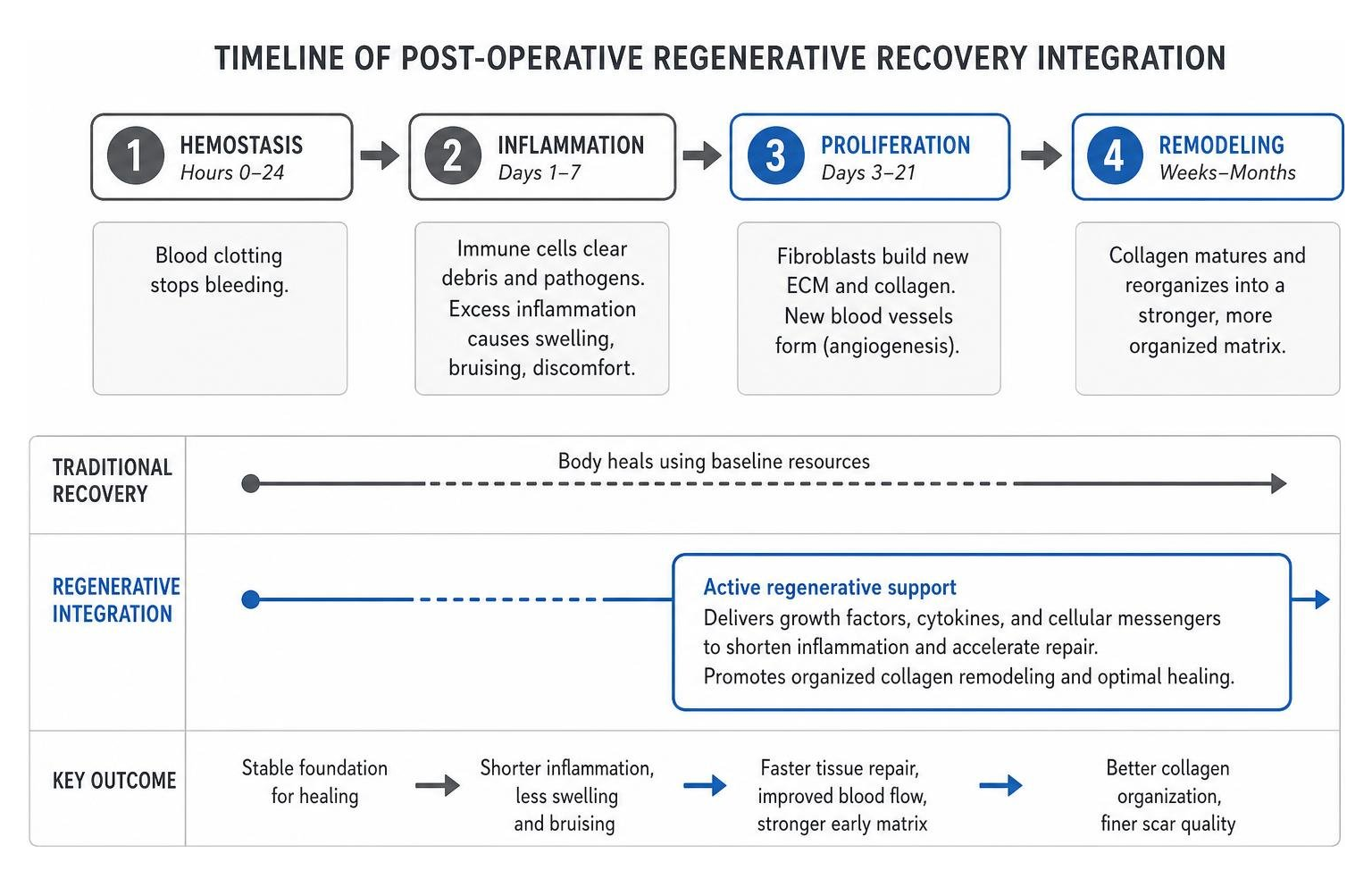
Immediately after surgery, your eyelids will feel tight, and your vision may be slightly blurry due to the protective lubricating ointment we apply. You will experience some swelling and bruising, which typically peaks around day 3 or 4 before gradually subsiding.

Many patients ask: How long will eyes feel tight after blepharoplasty? This sensation of tightness is a normal part of the healing tissue contracting and usually softens significantly within the first few weeks. To ensure your incisions heal into flat, virtually invisible lines, you can implement our helpful Tips to reduce scars after blepharoplasty surgery.
Recovery Timeline and Aftercare
While everyone heals at their own pace, here is a typical, realistic recovery timeline:
- Days 1–2: Rest with your head elevated on a few pillows. Apply cold compresses (ice packs or chilled gel masks) for 10–15 minutes every hour to minimize swelling. Use your prescribed antibiotic ointment and lubricating eye drops.
- Days 5–7: You will return to our clinic for your first post-op check. If we placed external stitches, they are painlessly removed during this visit. For more details on what to expect regarding sutures, read Will I need stitches after blepharoplasty surgery.
- Days 10–14: Most of the visible bruising and swelling will have faded. Most patients feel highly comfortable returning to work, running errands, and socializing. You can typically resume wearing contact lenses and light eye makeup around the 14-day mark.
- Weeks 3–4: You can gradually return to your normal workout routine. If you are eager to get back to the gym, check out our guidelines on How long after blepharoplasty surgery can i resume exercise.
Essential Post-Operative Care Tips:
- Never rub or scratch your eyes, even if they feel itchy as they heal.
- Wear dark sunglasses outdoors to protect your healing skin from UV damage and wind irritation.
- Avoid bending over, heavy lifting, and vigorous coughing, as these increase blood pressure in your head and can trigger bleeding.
- Sleep on your back with your head elevated for at least the first two weeks.
Longevity of Results
One of the best things about blepharoplasty is its exceptional longevity.
Upper eyelid surgery results typically last 5 to 10 years, and for many patients, the benefits last a lifetime. While the surgery resets the clock, your body will continue its natural aging process. Over time, gradual brow descent might eventually cause a small amount of skin to settle back down onto the lids.
Lower eyelid surgery is even more durable. Once we remove or reposition the herniated fat pads under your eyes, those specific fat bags rarely return. To learn more about what to expect long-term, read Will eye bags return after blepharoplasty surgery.
Risks, Costs, and Non-Surgical Alternatives
No surgical procedure is entirely without risk. Part of our commitment to patient safety is providing transparent education on possible complications, financial investments, and alternative options.
To understand the broader safety profile of this procedure, you can review the official resource on Eyelid Surgery Risks and Safety.
Potential Risks and When to Contact Your Doctor
While serious complications are exceedingly rare in the hands of an experienced, board-certified oculoplastic surgeon, potential risks include:
- Temporary Dry Eye: This is the most common side effect. It is easily managed with lubricating drops and usually resolves within a couple of weeks.
- Lagophthalmos: This is a temporary inability to close your eyes completely, usually caused by post-surgical swelling. It is highly manageable with protective nighttime ointments until the swelling goes down.
- Infection and Bleeding: Because the eyelids have an incredibly rich blood supply, infections are highly uncommon, but we still prescribe preventative antibiotic ointments.
- Asymmetry or Scarring: Minor differences in healing can occur, though precise surgical planning minimizes this.
When to call us immediately: If you experience sudden, severe pain, a rapid increase in swelling in only one eye, active bleeding that doesn’t stop with gentle pressure, or any sudden changes in your vision, contact our clinic or seek emergency medical care immediately.
Costs, Insurance, and Non-Surgical Options
The cost of blepharoplasty varies depending on whether you are treating the upper lids, lower lids, or both, as well as the complexity of your anatomy. Because cosmetic procedures are not covered by health insurance, patients are responsible for these fees.
However, if your sagging upper eyelids physically block your peripheral vision, your insurance provider (including Medicare) may cover the procedure as a functional blepharoplasty. To qualify, you must undergo a standardized visual field test (perimetry) performed by an eye specialist. This test documents whether your vision improves significantly when the excess skin is manually lifted out of the way.
If you are not quite ready for surgery, you might wonder: Are there alternatives to eyelid surgery for tired looking eyes? While non-surgical options like Botox, dermal fillers, or laser skin resurfacing can beautifully improve fine lines and minor hollows, they cannot physically lift sagging skin or remove large fat bags. They are excellent for delaying the need for surgery, but they cannot replicate the definitive results of a surgical blepharoplasty.
Frequently Asked Questions about Eyelid Lifts
Will my eyes look larger after blepharoplasty?
Yes, but in a very natural, youthful way—not a “surprised” or wide-eyed look. By removing the heavy, drooping skin that acts like a half-drawn window shade, more of your natural iris and sclera (the white of your eye) are revealed. This opens up your gaze, making your eyes look brighter, more alert, and naturally larger. For a deeper look at this visual effect, read Will my eyes look larger after blepharoplasty.
Can blepharoplasty get rid of dark circles under the eyes?
It depends on what is causing them. If your dark circles are actually shadows cast by puffy, protruding under-eye bags, then a lower blepharoplasty will smooth out that transition and dramatically improve the darkness. However, if your dark circles are caused by true skin hyperpigmentation (dark pigment in the skin itself), surgery will not change the color of the skin. To learn more about managing this common concern, read Can blepharoplasty get rid of dark circles under the eyes.
Is eyelid surgery painful?
Surprisingly, no. Blepharoplasty is widely recognized as one of the least painful cosmetic procedures. Most patients report feeling a sensation of tightness, mild stinging, or soreness on the day of surgery, which is easily managed with over-the-counter Tylenol. We rarely need to prescribe strong pain medications, and most patients are completely comfortable within 24 to 48 hours.
Conclusion
Your eyes are the focal point of your face and your primary tool for connecting with the world. Deciding to undergo an eyelid lift is a deeply personal choice, and addressing your concerns with honest, medically sound answers is the first step toward a confident decision.
At Myint Oculo Facial Plastic Surgery And Facial Regeneration, we specialize in delivering natural-looking, elegant results that honor your unique facial structure. Dr. Shoib Myint brings a rare, highly specialized dual fellowship training in both ophthalmic plastic surgery and facial plastic surgery. With over two decades of experience, he combines the delicate precision of an eye surgeon with the artistic eye of a facial reconstructive specialist.
If you are ready to say goodbye to tired-looking eyes and explore your options in Las Vegas, NV, or Beverly Hills, CA, we invite you to take the next step. Schedule a consultation for an eyelid lift with us today, and let us help you restore your vibrant, refreshed self.