

Can Regenerative Lower Face Procedures Actually Reverse Sagging Jowls?
August 25, 2026
Why Sagging Jowls Are So Hard to Treat, and What Actually Works
Regenerative facial tightening is a category of treatments that stimulates your body’s own cells to rebuild lost collagen, elastin, and structural support, rather than simply masking the signs of aging.
Here’s a quick breakdown of what it involves:
- What it targets: Skin laxity, jowls, loss of jawline definition, and lower face sagging
- How it works: Controlled energy (ultrasound, radiofrequency) or biological agents (PRP, exosomes, biostimulators) trigger the body’s natural wound-healing and collagen-rebuilding response
- Who it’s for: Adults with mild-to-moderate facial sagging who want natural, progressive results, with or without surgery
- Non-surgical options include: Ultrasound devices, radiofrequency, RF microneedling, biostimulatory injectables, and combination protocols
- Surgical options include: Deep plane facelift with autologous fat transfer, enhanced by regenerative medicine techniques
- Key difference from traditional facelifts: Regenerative approaches rebuild tissue from within; traditional surgical lifts reposition existing tissue mechanically
- Realistic timeline: Non-surgical results develop over 2–6 months; surgical results are more immediate and longer-lasting
If you’ve looked in the mirror lately and noticed your jawline softening, with a heaviness pulling downward at the corners of your mouth, you’re not imagining it. Jowls are one of the most common and frustrating signs of facial aging, and they’re notoriously difficult to address because they aren’t caused by just one thing.
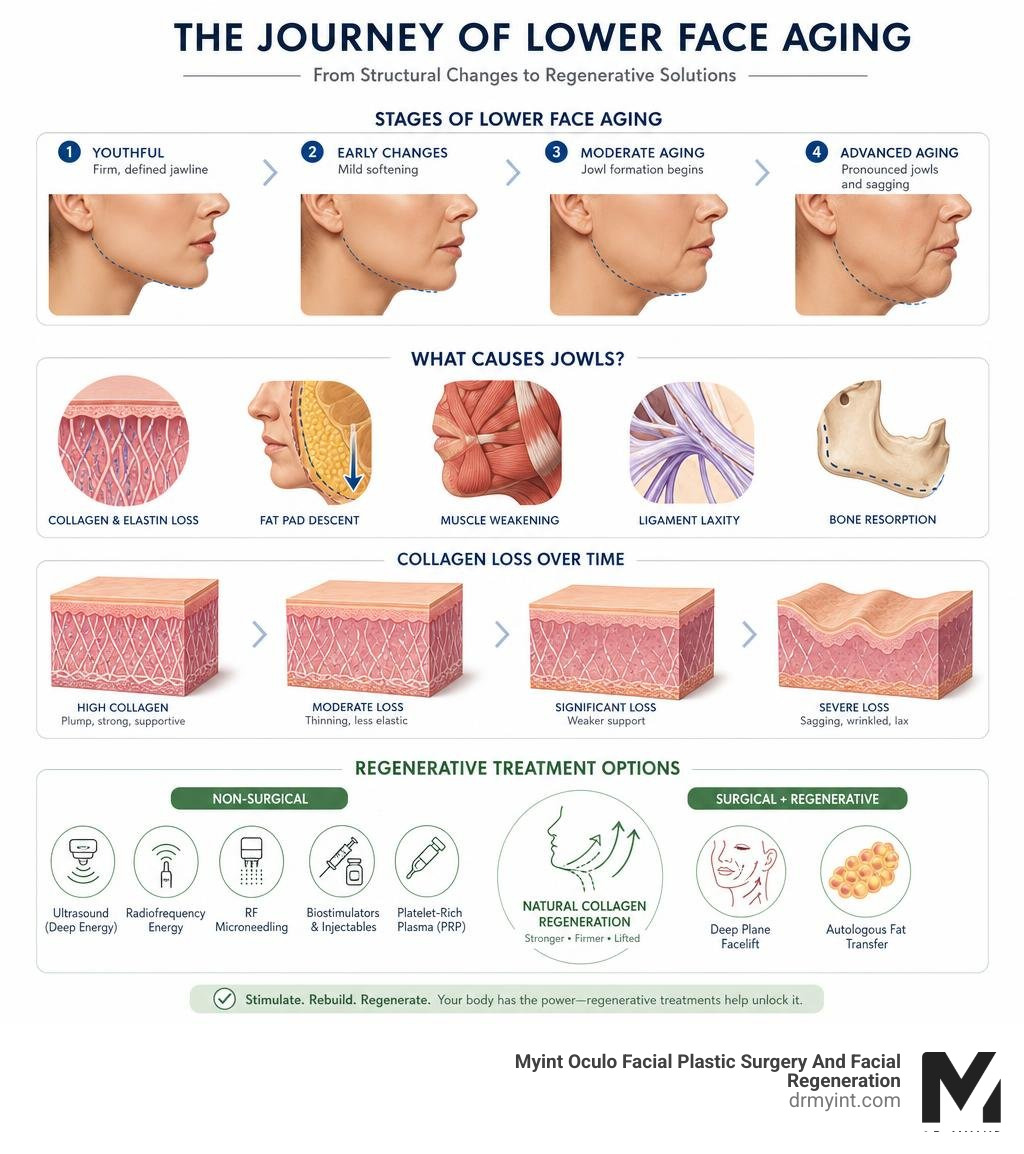
Skin loses collagen. Facial fat shifts. Muscles weaken. Even bone changes shape over time.
That’s why a single cream, a quick injectable, or a basic skin tightening device often falls short. The problem runs deeper than the surface.
The good news: the field of regenerative aesthetics has advanced significantly. Today, there are both non-surgical and surgical options that don’t just pull skin tighter. They actually encourage your body to rebuild the structural tissue it has lost.
I’m Dr. Shoib Myint, a dual-fellowship trained Oculo Facial Plastic and Reconstructive Surgeon with over 20 years of experience and more than 15,000 surgeries performed, specializing in the face, eyes, and neck. My practice integrates the latest advances in regenerative facial tightening, from energy-based devices and biostimulators to deep plane facelifts enhanced by regenerative medicine, to help patients achieve results that look natural, not “done.” In this guide, I’ll walk you through exactly what works, what doesn’t, and how to find the right approach for your anatomy and goals.
Understanding Jowl Formation and the Role of Regenerative Facial Tightening
To truly understand how to reverse a sagging jawline, we have to look beneath the surface. Jowls do not form overnight, nor are they merely “stretched skin.” They are the visible culmination of a multi-layered structural collapse.
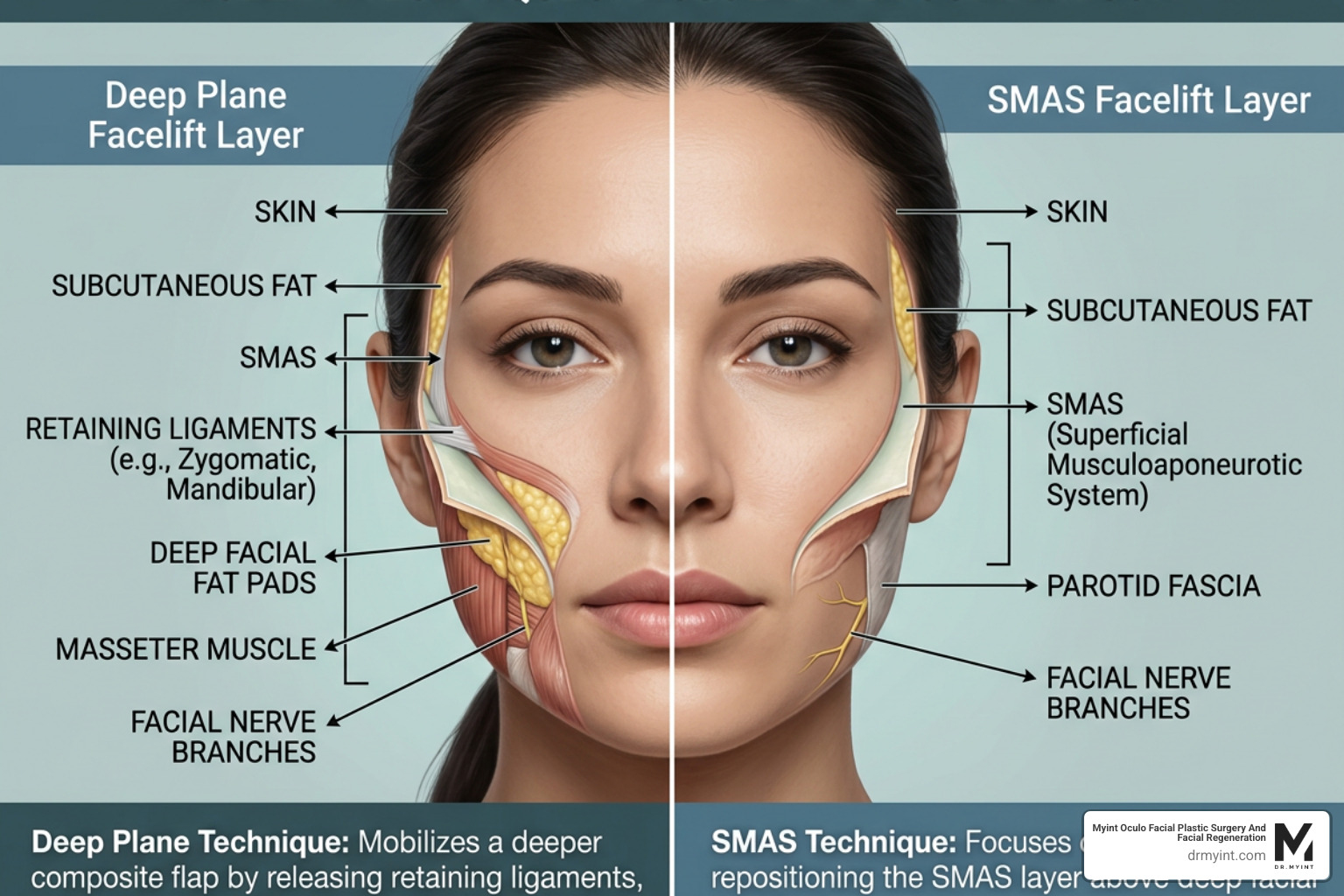
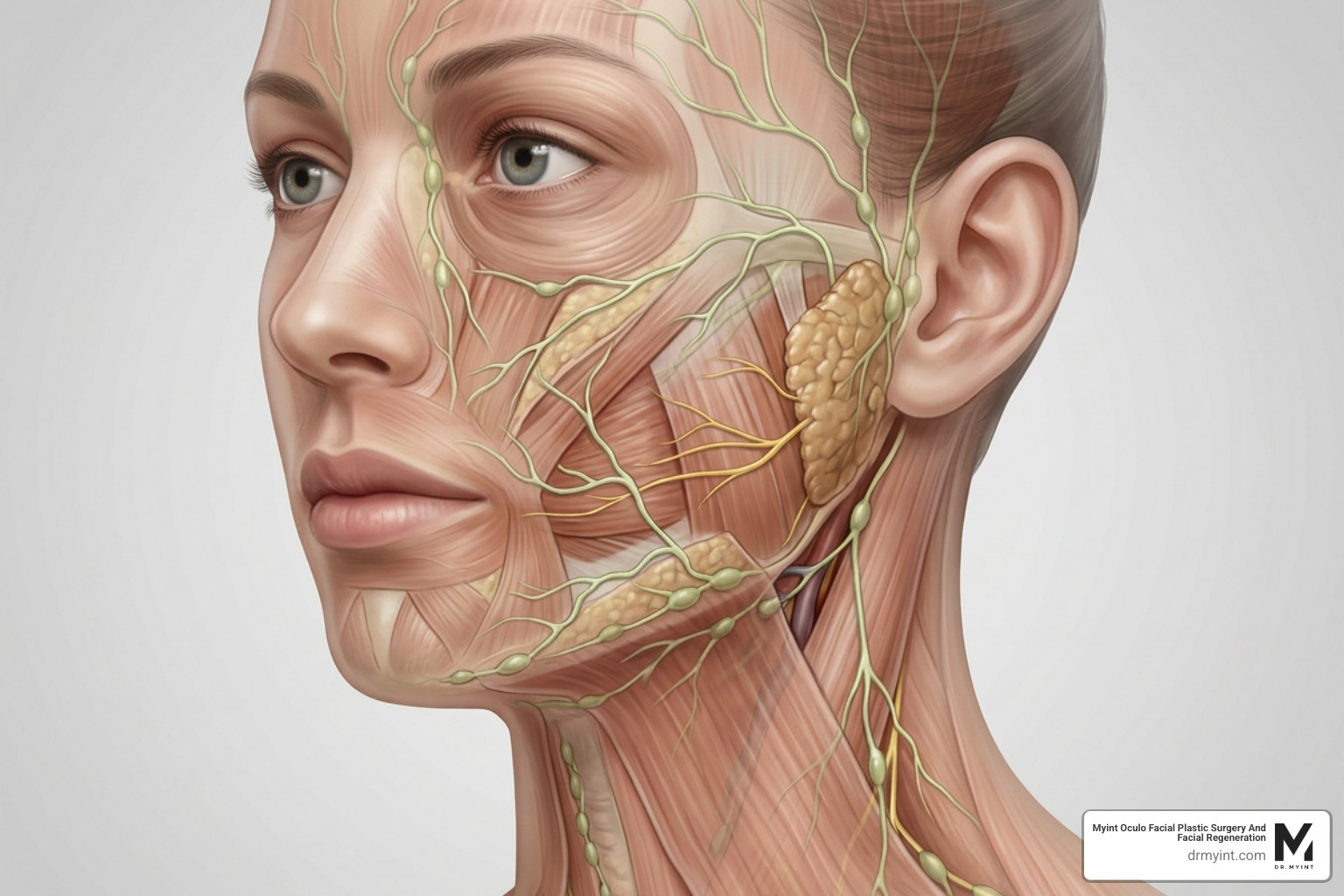
In our youth, a complex network of retaining ligaments acts like sturdy anchoring pillars, holding the skin and the Superficial Muscular Aponeurotic System (SMAS) firmly against the facial bones. As we age, these ligaments stretch and weaken. Concurrently, the skin loses its underlying elasticity, and gravity wins the tug-of-war, causing the soft tissues of the cheeks to descend and pool over the mandibular border. This pooling is what we call jowls.
Traditional cosmetic procedures often focus on pulling the skin tight or filling the hollows. However, regenerative facial tightening takes a fundamentally different path. Instead of temporarily masking these structural deficiencies, regenerative treatments prompt your body’s own cells to repair, rebuild, and restore the youthful matrix of the lower face.
The Biological Mechanics of Lower Face Aging
At the cellular level, the main character in the story of skin aging is the fibroblast. Located in the dermis, fibroblasts are the factory cells responsible for producing collagen and elastin. Collagen provides the skin with its structural strength (making up over 80% of a healthy dermis’s dry weight), while elastin gives it the ability to stretch and snap back.
Starting as early as our 20s, natural collagen production slows down. Over time, existing collagen fibers become disorganized and fragmented. This degradation is accelerated by extrinsic factors like UV radiation, which leads to a condition known as solar elastosis, where abnormal, clumped, sun-damaged elastic fibers accumulate in the dermis, displacing healthy collagen.
Furthermore, facial aging is compounded by volume loss. The deep fat pads of the midface atrophy and shift downward, leaving the upper face hollow and adding heavy volume to the lower jawline. To reverse this, we must biologically stimulate those sleepy fibroblasts to produce fresh, organized Type I and Type III collagen, while clearing away the damaged elastotic material.
How Regenerative Facial Tightening Differs from Traditional Facelifts
Traditional facelifts historically relied on pulling the skin tight (often resulting in a windblown or “swept” appearance) or mechanically tightening the deeper muscle layers without improving the quality of the skin itself.
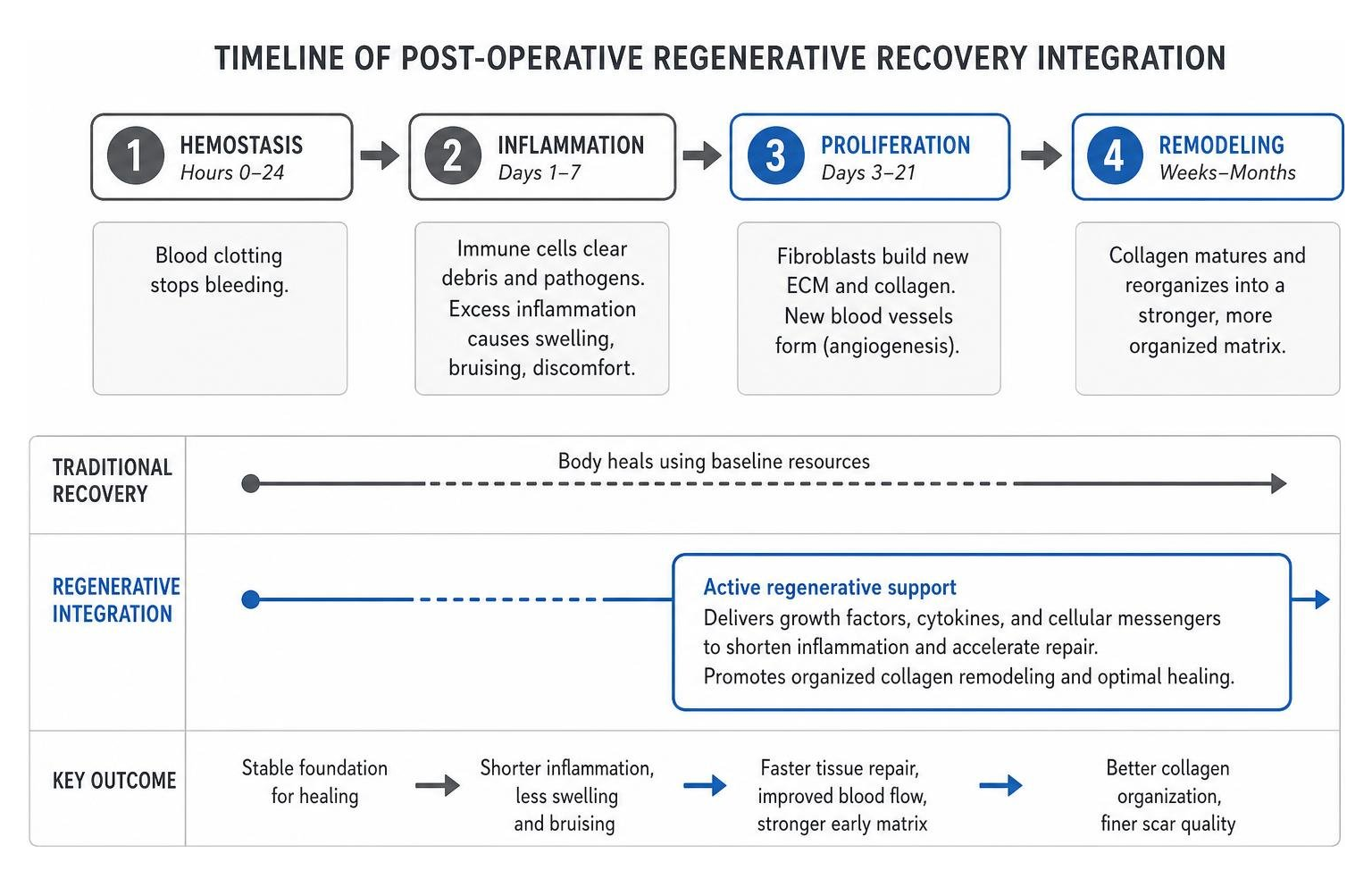
Regenerative facial tightening focuses on cellular regeneration. By delivering precise thermal, electrical, or biological triggers, these therapies initiate a controlled wound-healing cascade. This response progresses through three distinct phases:
- The Inflammatory Phase: The initial trigger stimulates cellular signaling.
- The Proliferative Phase: Fibroblasts migrate to the area and multiply rapidly.
- The Remodeling Phase: New, highly organized collagen and elastin networks are synthesized over several months.
This biological tissue remodeling improves skin thickness, elasticity, and overall tone. While non-surgical options are highly effective for mild-to-moderate laxity, surgical options like a deep plane facelift can also be paired with regenerative techniques, such as autologous fat transfers, to restore lost volume and structural integrity at a cellular level. For those seeking to avoid surgery entirely, nonsurgical skin tightening offers a progressive, natural way to rebuild the lower face.
Non-Surgical vs. Surgical Regenerative Lower Face Procedures
When deciding how to tackle sagging jowls, patients in our Beverly Hills and Las Vegas clinics are often faced with a choice: should they opt for a non-surgical energy-based approach, or is it time to consider a surgical intervention?
The right choice depends heavily on the degree of tissue descent, skin quality, and your personal goals. To help visualize these pathways, let us look at how these approaches target different layers of the facial anatomy.
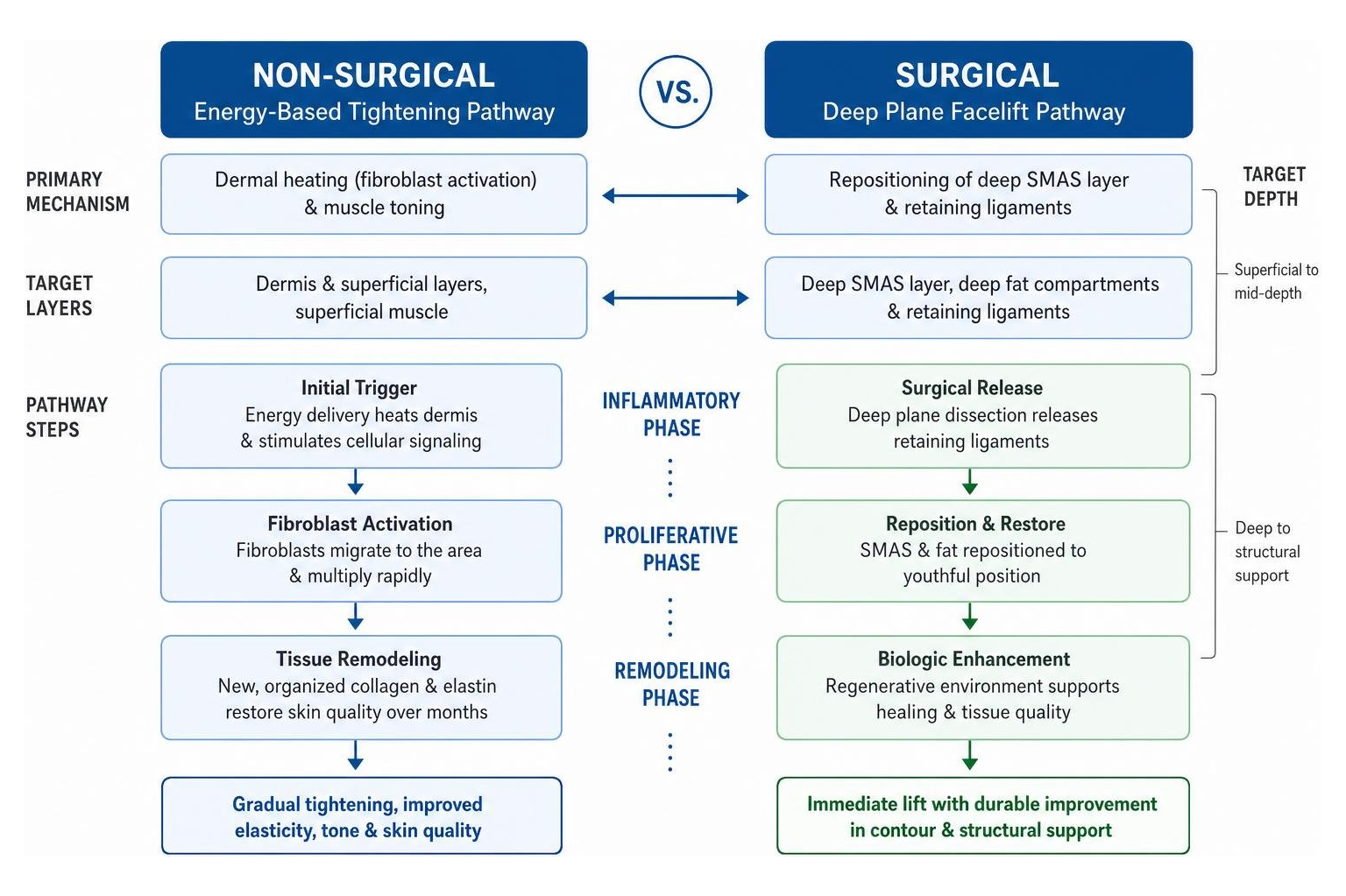
Below is a direct comparison of how non-surgical energy devices and surgical deep plane facelifts address lower facial aging:
| Feature | Non-Surgical Energy-Based Devices | Surgical Deep Plane Facelift |
|---|---|---|
| Primary Mechanism | Dermal heating (fibroblast activation) & muscle toning | Repositioning of deep SMAS layer & retaining ligaments |
| Target Layers | Epidermis, dermis, and superficial muscle layers | Deep SMAS, retaining ligaments, and subcutaneous fat |
| Anesthesia Required | None or topical numbing | Deep sedation or general anesthesia |
| Downtime | Zero to 48 hours (mild redness/swelling) | 10 to 14 days |
| Results Timeline | Progressive improvement over 2 to 6 months | Immediate structural lift, refining over 1 to 3 months |
| Longevity | 12 to 18 months (requires maintenance) | 10 to 15+ years |
| Best For | Mild-to-moderate laxity, early jowling | Moderate-to-severe sagging, deep jowls, heavy neck |
Energy-Based Devices and Biostimulators
For patients seeking non-invasive options, next-generation energy-based devices have revolutionized the aesthetic industry. A prime example is Sofwave, which utilizes proprietary SUPERB™ (Synchronized Ultrasound Parallel Beam) technology. Sofwave delivers parallel beams of ultrasound energy precisely at a depth of 1.5mm in the mid-dermis. This localized thermal energy heats the tissue to approximately 60–70°C, the optimal temperature for contracting existing collagen fibers and triggering neocollagenesis.
Because the energy is delivered in parallel cylinders, it completely bypasses the epidermis, leaving the skin surface untouched. This makes it incredibly safe for all skin types (Fitzpatrick scales I–VI) with zero risk of post-inflammatory hyperpigmentation. Sofwave holds FDA clearance for lifting the eyebrow, submental (under-chin) area, and neck, and has even been cleared for cellulite treatment. It has earned prestigious accolades, including ELLE Magazine’s Future of Beauty Award, and counts celebrities like Kim and Khloe Kardashian among its loyal fans.
Other powerful non-surgical modalities target both the skin and the underlying muscle framework. For instance, synchronized radiofrequency (RF) paired with High-Intensity Facial Electrical Stimulation (HIFES) targets the dermal layer to boost collagen while simultaneously inducing supramaximal contractions in facial elevator muscles (like the zygomaticus major and frontalis). This dual action tones the muscle framework while firming the skin. Clinical studies, such as The Efficacy and Safety of Synchronized Radiofrequency and High Intensity Facial Electrical Stimulation in Improving Facial Skin Laxity and Quality in Asians – PMC, show a 30% increase in muscle tone and a 37% reduction in wrinkles.
To complement these energy devices, we often utilize biostimulatory injectables like Sculptra (poly-L-lactic acid). Rather than acting as a traditional gel filler, Sculptra serves as a biological signal, prompting fibroblasts to gradually rebuild the dermal matrix over several months. For patients dealing with crepey skin texture or early jowling, combining these treatments with RF microneedling delivers a powerful “inside-out” tightening effect by pairing physical micro-injuries with deep thermal energy.
Deep Plane Facelift and Autologous Fat Transfer
While non-surgical devices are fantastic for maintenance and early aging, they cannot physically lift heavy, descended tissues. When jowls are moderate to severe, the gold standard is a surgical deep plane facelift.
Unlike a traditional SMAS facelift, which simply pulls the superficial tissues tight, a deep plane facelift goes beneath the SMAS layer. By releasing the deep, tight retaining ligaments that have anchored the jowls in place, we can gently lift the entire midface, jawline, and neck as a single, cohesive unit. This tension-free release allows us to reposition the deep fat pads and muscle layers back to their youthful positions, completely eliminating the jowls without any “pulled” or artificial appearance.
To elevate this surgical result to a regenerative level, we frequently pair the deep plane facelift with a microfat nanofat facelift. During this procedure, we perform a highly specialized facial fat transfer. We harvest a small amount of fat from the patient’s own body, process it to isolate both the structural microfat (for volume) and the liquid nanofat (which is incredibly rich in stem cells, growth factors, and regenerative cellular signals), and gently inject it into the treated areas. This autologous fat transfer does not just restore lost volume to hollow temples or flat cheeks; it actively regenerates the overlying skin quality, improving texture, tone, and skin thickness from the inside out.
The Science of Healing: Regenerative Medicine and Hyperbaric Oxygen Therapy
At our practices in Beverly Hills and Las Vegas, we believe that achieving an outstanding aesthetic result is only half the battle; the other half is ensuring a rapid, seamless, and biologically optimized recovery. This is where the intersection of plastic surgery and regenerative medicine healing becomes a game-changer.
To accelerate cellular repair, we incorporate advanced modalities like Hyperbaric Oxygen Therapy (HBOT). During HBOT, a patient relaxes inside a state-of-the-art chamber breathing 100% pure medical-grade oxygen at increased atmospheric pressure. This process supersaturates the blood plasma, allowing oxygen to reach deep tissues that compromised blood vessels cannot immediately access post-surgery.
Accelerating Recovery After Deep Plane Facelift Surgery
After a deep plane facelift, the body naturally initiates an inflammatory response characterized by swelling and bruising. While this is a normal part of healing, prolonged swelling can delay tissue remodeling and prolong your social downtime.
By utilizing HBOT and specialized regenerative protocols, we can dramatically decrease recovery times. The flood of pure oxygen reduces localized edema (swelling) by causing mild vasoconstriction while simultaneously boosting cellular energy (ATP production). This extra energy allows damaged cells to repair themselves much faster. Patients who utilize HBOT as outlined in an essential guide to regenerative medicine for facelift recovery consistently report a significant reduction in post-operative bruising, less discomfort, and a much faster return to their daily social lives.
Maximizing Results with Regenerative Facial Tightening Post-Op
The benefits of regenerative medicine do not end once the surgical incisions have closed. In the weeks and months following a facelift, the deep tissues are actively undergoing neocollagenesis and remodeling.
To maximize this process, we introduce targeted, medical-grade regenerative skincare. Products containing platelet-derived exosomes, growth factors, and polynucleotides act as microscopic messengers, instructing the dermal fibroblasts to produce highly organized, youthful collagen. Understanding how regenerative skincare boosts your facelift results allows our patients to protect their surgical investment, ensuring their skin remains thick, elastic, and radiant for many years to come.
Frequently Asked Questions About Lower Face Rejuvenation
Navigating facial rejuvenation can be overwhelming. Here are some of the most common questions we hear from patients in our Nevada and California offices.
How long do the results of non-surgical tightening last?
Because non-surgical energy-based devices rely on your body’s ability to produce new collagen and elastin, the results are highly natural but not permanent. Generally, the visible lifting and tightening effects of treatments like Sofwave or RF microneedling last between 12 and 18 months.
Over time, the natural aging process will continue. To maintain your refreshed jawline and keep the fibroblasts active, we typically recommend a single maintenance session every 12 to 18 months. Additionally, patients often ask: can nonsurgical skin tightening firm sagging neck skin? Absolutely. These energy-based devices are excellent for smoothing out crepey neck skin and tightening the submental area, helping to create a cohesive, youthful transition between the jawline and the neck.
Can a deep plane facelift be combined with eyelid surgery?
Yes, this is one of the most common combinations we perform. When a patient presents with sagging jowls, they often also experience hollows under the eyes, droopy eyelids, or heavy under-eye bags. Addressing only the lower face can sometimes make the eyes look older by comparison.
Combining a deep plane facelift with a customized eyelid lift (blepharoplasty) or a fat transfer to the tear troughs allows us to achieve a harmonious, balanced, and fully refreshed look. When planning your rejuvenation, it is helpful to weigh your options, such as lower eyelid surgery vs mini facelift which one is right for you. Furthermore, we can address the entire neck and jawline simultaneously; we often discuss with patients how can you combine a facelift and neck lift to ensure there are no mismatched areas of laxity, giving you a sharp, clean jawline from every angle.
What is the role of hyperbaric oxygen in facelift and eyelid lift recovery?
Hyperbaric Oxygen Therapy plays an invaluable role in the healing process of both facial and eyelid surgeries. The delicate skin of the eyelids and the newly lifted tissues of the lower face are highly sensitive to oxygen levels post-op.
By undergoing HBOT sessions, we increase oxygen perfusion to these healing tissues by up to 10 to 15 times the normal rate. This high-oxygen environment:
- Stimulates the rapid synthesis of new blood vessels (angiogenesis).
- Speeds up the resolution of bruising by helping the body clear away broken red blood cells.
- Mitigates the risk of wound-healing complications, particularly in the delicate incision lines behind the ears and along the eyelashes.
Incorporating HBOT into the facelift healing process ensures that our patients heal safely, beautifully, and with minimal downtime.
Conclusion
At Myint Oculo Facial Plastic Surgery And Facial Regeneration, we do not believe in a one-size-fits-all approach to facial aging. Sagging jowls are a complex, multi-layered problem that requires a deep understanding of facial anatomy, surgical precision, and the cutting-edge science of regenerative medicine.
Whether you are looking to start your aesthetic journey with non-surgical regenerative facial tightening or are ready to restore a youthful jawline with a customized deep plane facelift, our team is here to guide you. Dr. Myint’s rare dual-fellowship training and over two decades of expertise ensure that your treatment plan will be tailored precisely to your unique features, yielding results that are natural, elegant, and uniquely yours.
If you are ready to take the next step and discover what regenerative lower face procedures can do for you, we invite you to contact us today to request a personalized consultation. Let’s work together to help you reveal your most radiant, confident self.